- Length, about 20 miles
- 32-33 km
- People a day, per the City
- 500,000
- No ticket, no entrance fee
- Free
On this page
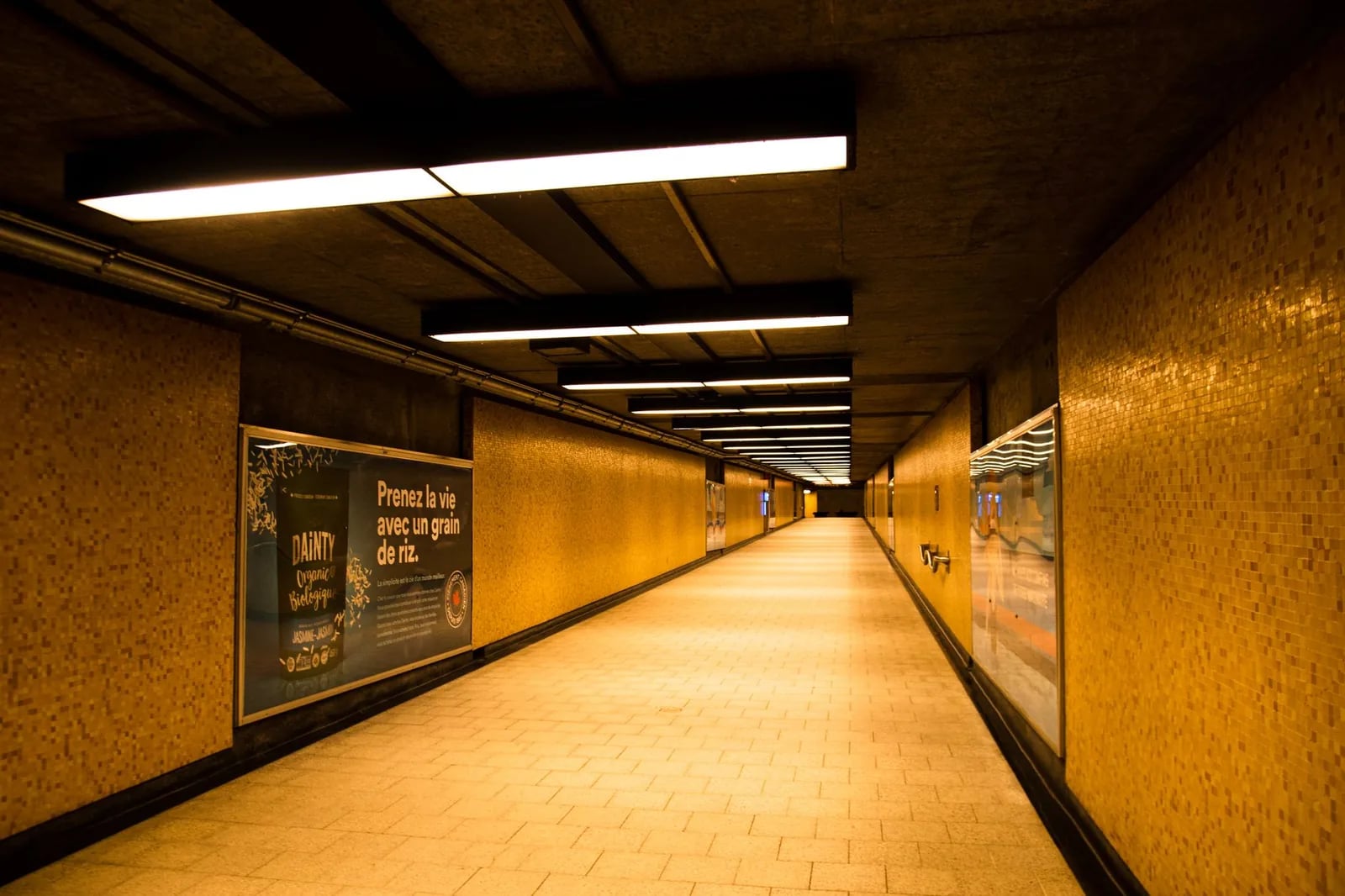
The Montreal underground city (RÉSO) is a network of about 32 to 33 km (20 miles) of indoor passages that link metro stations, malls, office towers, the train station and the convention center downtown. It is free, has no single opening hours and is not one continuous tunnel. Below, where to enter, what is worth a stop, how to find your way and what is open when, checked in November 2026.
Tours and activities in downtown Montreal
There is no ticket for the underground city, so these are paid things to do in the same downtown core: a guided walk, an immersive show and a bus tour.
from $5 per person
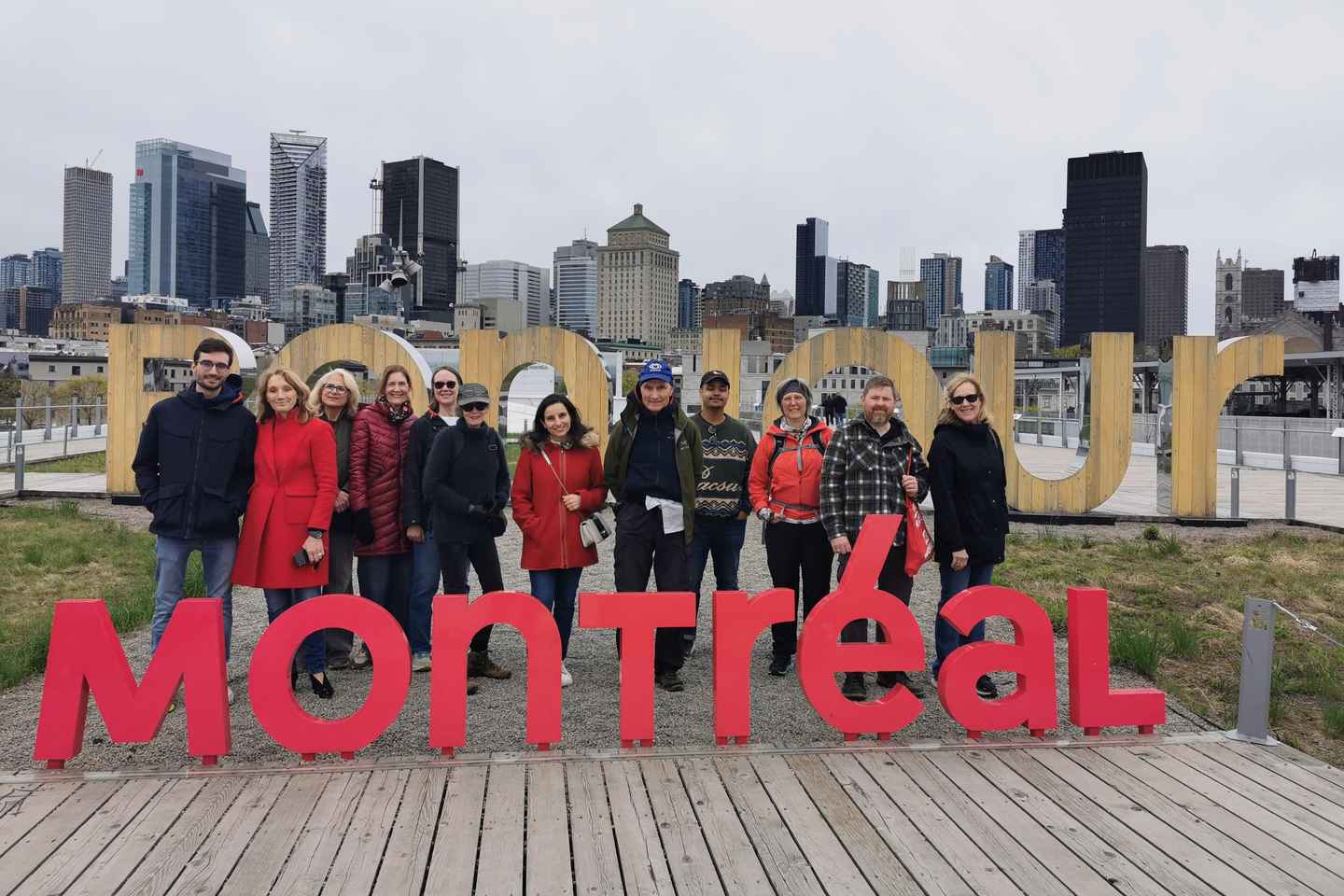
Montreal: Old Montreal & Downtown Walk with a Licensed Guide
A guided walk through Old Montreal and downtown with a licensed guide.
4.4(79 reviews)3 hours
- Free cancellation

from $26 per person
Montreal: OASIS Immersion Entry Ticket
An entry ticket to the OASIS Immersion experience.
4.3(860 reviews)75 to 80 minutes

from $43 per person
Montreal: Guided Bus Tour
A guided bus tour of Greater Montreal.
4.4(3,556 reviews)3.5 hours
- Free cancellation
See more activities in Montreal
What the Montreal underground city is, and how big
It began in 1962 with the underground mall of Place Ville Marie and grew after Expo 67 and the opening of the metro, one building at a time. That is why it feels like a patchwork: each passage belongs to the mall or tower above it. The City of Montreal puts the length at about 32 km, Tourisme Montréal gives 32 or 33 depending on the page, and the fire department counts 30, so treat it as roughly 32 km.
About 500,000 people use it every day, according to the City and Tourisme Montréal. The number of outside entrances is not officially published, and the figures quoted online run from a bit over a hundred to almost two hundred, so ignore any page that states one with confidence.
Montreal underground city map and signs
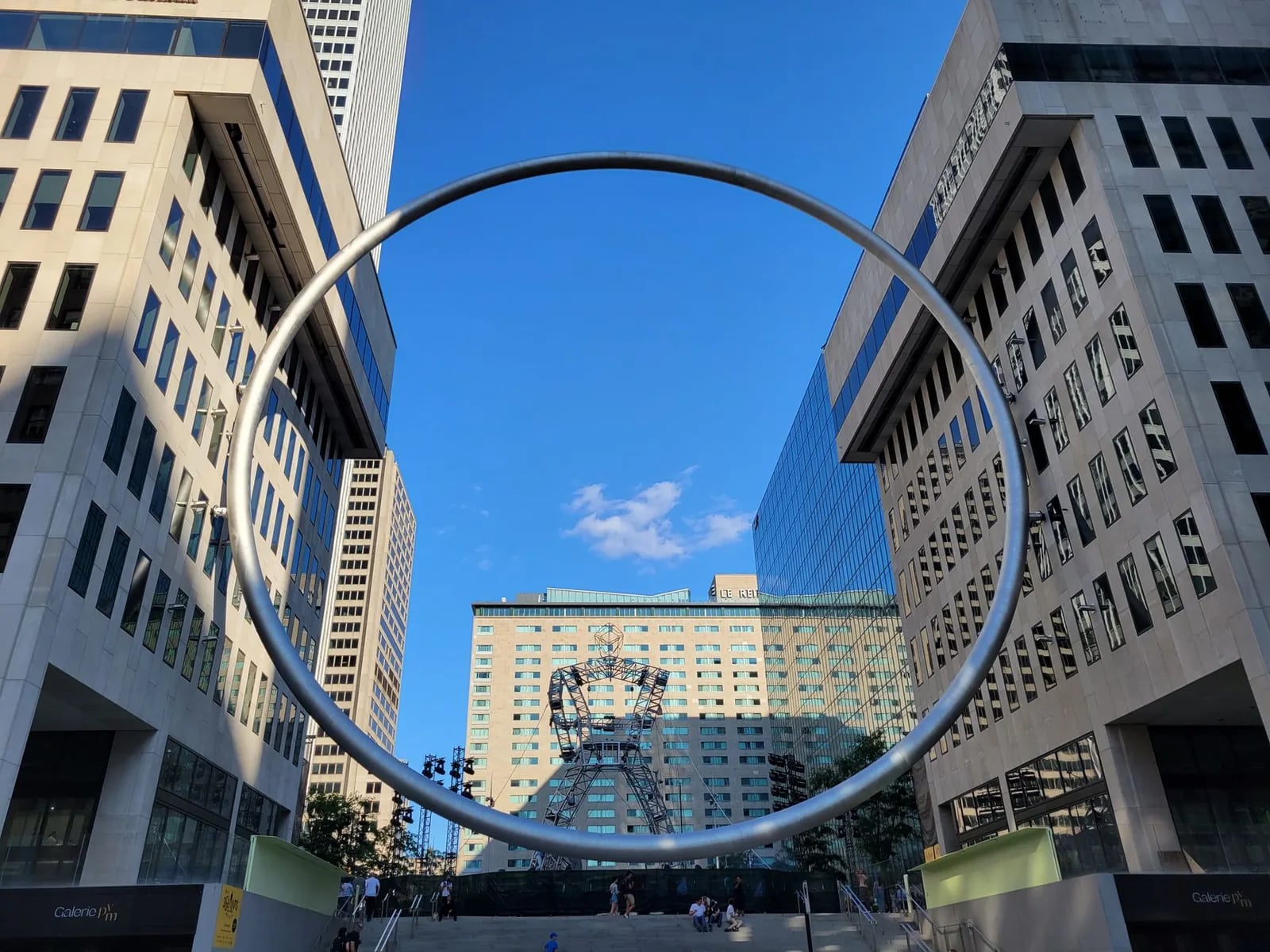
The City of Montreal publishes an official map on its RÉSO page, and the network is signed with RÉSO signs posted throughout. In practice the map matters less than the signs and the buildings: you move from one named block to the next, and the signs repeat the names of stations and malls. The sections do not all connect to each other without a short walk outside, which is why a single flat map can mislead you.
Use the metro line as your spine. The central stretch is served by Bonaventure, Square-Victoria-OACI, Place-d'Armes, Place-des-Arts, Peel, McGill and Lucien-L'Allier, and the convention center sits between Place-d'Armes and Square-Victoria. If you lose your bearings, find the next station name on a sign and start again from there.
Where to enter the underground city
- McGill metro (green line) opens directly into the Eaton Centre, and it is one stop west of Place-des-Arts.
- Place Ville Marie, at 1 Place Ville Marie, links to the Bonaventure metro (orange line) and to McGill (green line), and its gallery connects to the Gare Centrale and the Eaton Centre.
- Complexe Desjardins, at the eastern end by the Place des Festivals, is the starting point that Tourisme Montréal recommends.
- Peel, Bonaventure, Square-Victoria-OACI and Place-d'Armes are other metro doors, the last two within walking distance of Old Montreal.
If you sleep in the old town, our hotels in Old Montreal guide lists places near Place-d'Armes and Square-Victoria, the two stations that put you in the network. The Notre-Dame Basilica is a short walk up from Place-d'Armes.
What to see in the Montreal underground city
| Stop | Connects to | Known for |
|---|---|---|
| Eaton Centre | McGill metro | About 125 shops, Time Out Market |
| Place Ville Marie | Bonaventure, McGill | Food hall, 46th-floor observatory |
| Complexe Desjardins | Place-des-Arts metro | Shops, east end of the network |
| Place des Arts | Place-des-Arts metro | Opera, orchestra, contemporary art museum |
| Convention center | Place-d'Armes, Square-Victoria | Rainbow-colored glass walls |
| Gare Centrale | Via Place Ville Marie | Murals in the station hall |
The Eaton Centre has about 125 shops on five levels and the first Time Out Market in Canada. Place Ville Marie, designed by I. M. Pei and Henry N. Cobb, is the cross-shaped tower where it all started, with a food hall and an observatory on the 46th floor. Place Bonaventure, with a fragment of the Berlin Wall, is a quieter stop for people who like odd details.
For food and shopping, Place Montréal Trust has a bookstore and a Zara, and Complexe Desjardins, which opened in 1974, has a French-language bookstore, a Winners and a pharmacy. Le Cathcart, the food hall at Place Ville Marie, is the easiest lunch stop, and the Eaton Centre has a restaurant in an Art Nouveau style, Île de France,. The convention center is worth a look for its rainbow-colored glass, even if you have no event to attend.
There is a cultural thread too: the contemporary art museum and the concert halls of the Place des Arts are on the network, and Art Souterrain, a free contemporary art festival centered on Place Ville Marie, is announced for April 24 to May 9, 2027. For paintings and sculpture on a bigger scale, see the Montreal Museum of Fine Arts guide.
A self-guided route through the underground city
Tourisme Montréal suggests a west-to-east or east-to-west walk that touches the main blocks in this order, which makes about half a day if you stop for lunch:
- Complexe Desjardins, facing the Place des Festivals.
- Place des Arts, one metro stop from McGill.
- McGill and the Eaton Centre, for lunch at the Time Out Market.
- Place Ville Marie, then the Gare Centrale.
- Place Bonaventure and the World Trade Centre, then the convention center.
You will go back outside once or twice along the way. That is normal, and it is what the surface plan is for if a passage is closed.
Montreal underground city opening hours
There is no schedule for the network as a whole. A passage is open when the building it runs through is open, so some corridors close in the evening. The thing that holds the network together is the metro, which runs from about 5:30 a.m. to about 1 a.m., depending on the line, the station and the day. As an example, the last weekday train at McGill leaves at 12:51 a.m. toward Honoré-Beaugrand and at 1:01 a.m. toward Angrignon. Check stm.info for your station.
| Eaton Centre | Hours |
|---|---|
| Monday and Tuesday | 10 a.m. to 7 p.m. |
| Wednesday to Friday | 10 a.m. to 9 p.m. |
| Saturday | 10 a.m. to 7 p.m. |
| Sunday | 11 a.m. to 6 p.m. |
Those are the Eaton Centre's hours for the week of November 16, 2026, and they change with the season and on holidays. Place Ville Marie, Complexe Desjardins and Place Montréal Trust do not publish a comparable table, so call ahead or check each site if you plan a late visit.
How not to get lost in the Montreal underground city
- Pick one zone at a time. Plan by named blocks (Place Ville Marie, Eaton Centre) instead of trying to follow one long line.
- Follow the RÉSO signs and the station names. When you do not see either, step into a mall directory.
- Keep a plan B at street level. Check the next block by phone before the evening, when corridors start to close.
- Expect level changes. The galleries have stairs and ramps at many points.
Accessibility in the underground city
The network is mostly flat inside each building, but there are stairs between sections, so a step-free trip has to be checked building by building. Not every metro station has an elevator: the STM plans to have accessible stations across a large part of the network by 2030, and its trip planner has an accessible option. Check the STM accessibility page for the stations on your route before you set out with a wheelchair or a stroller.
The Montreal underground city in winter
This is when it earns its reputation. The network is heated while the streets are not, and a large part of downtown can be crossed without going out in the cold. Wear layers that come off easily, because the corridors are warm and a coat gets heavy. On days when the cold is too sharp, pair the underground city with indoor sights such as the museum, and plan the rest of your days with the things to do in Montreal guide.
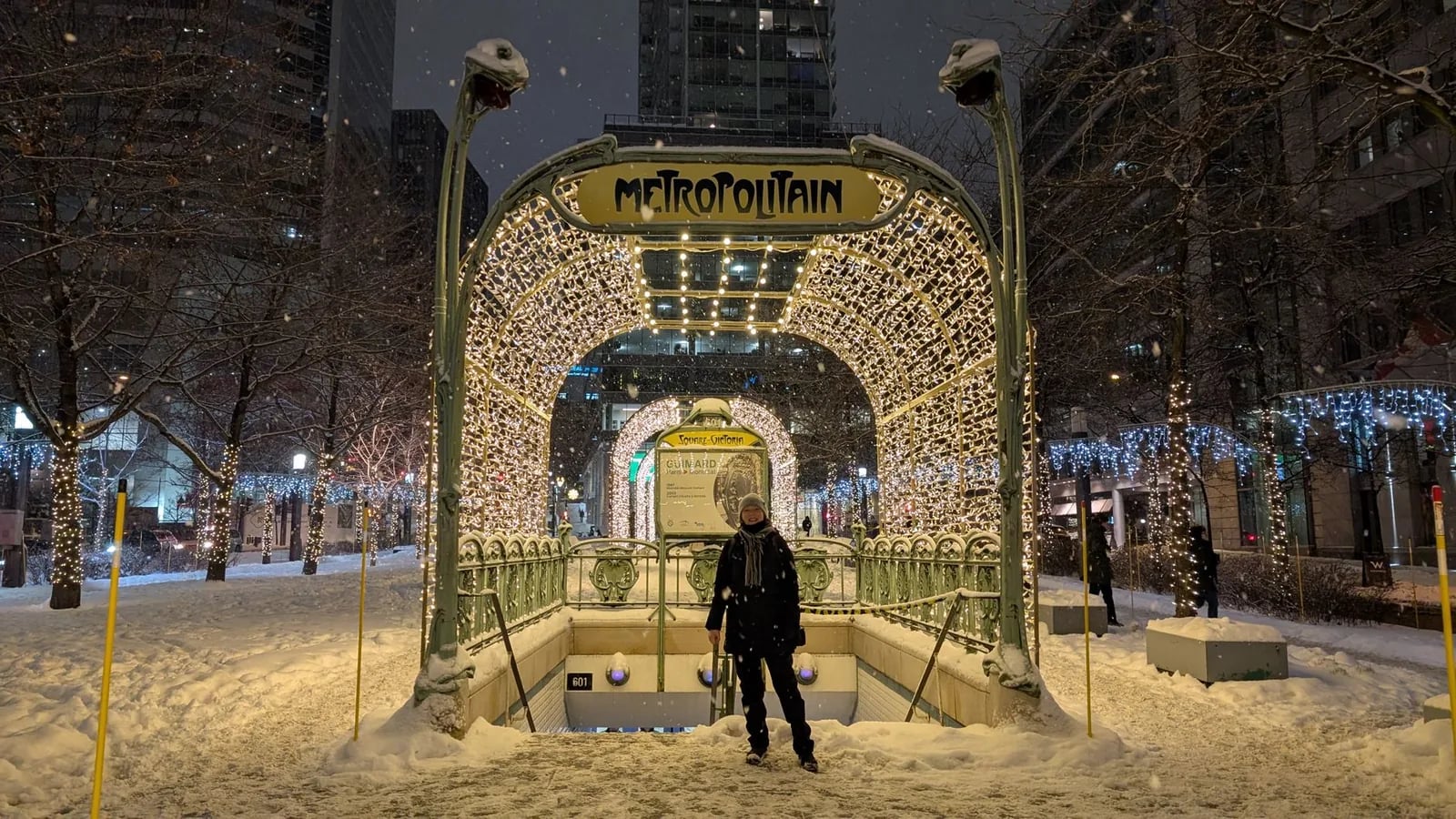
It is not a sight on its own. Many Montrealers use it daily as a commute and a shortcut, and treating it as a practical way to cross downtown, with a few good stops on the way, is the right expectation.