- Cover most of a first visit
- 4 areas
- 24-hour metro pass
- C$11.25
- Links Old Montreal to the Plateau
- Orange line
On this page
Most visitors spend their time in four areas that sit close together. Old Montreal is the stone-built historic district by the river, and downtown is the business, museum and shopping core above it. North of Sherbrooke Street, the Plateau and Mile End are the lived-in neighborhoods. The short answer: sleep in Old Montreal or downtown, and go up to the Plateau by metro for the neighborhood side of the city.
Montreal neighborhoods compared
The table gives the character of each area and how to reach it. The stations are all on the metro, and the orange line does most of the work.
| Area | Known for | Metro | Time to plan |
|---|---|---|---|
| Old Montreal | Basilica, cobblestones, river | Place-d'Armes, Champ-de-Mars | Half a day |
| Downtown | Museums, shopping, festivals | McGill, Peel, Place-des-Arts | A full day |
| Plateau | Staircases, parks, cafes | Sherbrooke, Mont-Royal | Half a day |
| Mile End | Bagels, murals, bookshops | Laurier, then walk | Half a day |
Old Montreal and the Plateau are on the orange line, downtown is on the green and orange lines, and Mile End is 10 to 15 minutes on foot from Laurier or Rosemont (buses 55 and 80 also run through it). A single metro trip is C$3.75 and a 24-hour pass C$11.25, and the getting around Montreal guide covers fares and last trains.
Old Montreal or downtown: where to spend the first day
Old Montreal is for history, stone streets, the basilica and slow evenings. It is worth visiting for the buildings and the museums, not the souvenir shops, and a first-time visitor can see the main streets in half a day. Be on Rue Saint-Paul and Place Jacques-Cartier before 10 a.m., because tour groups arrive and the terraces open from late morning. Pointe-à-Callière costs C$30 for an adult and is closed on Mondays, the Bonsecours Market is free, and the streets around them are pedestrian from April 15 to October 29 in 2026.
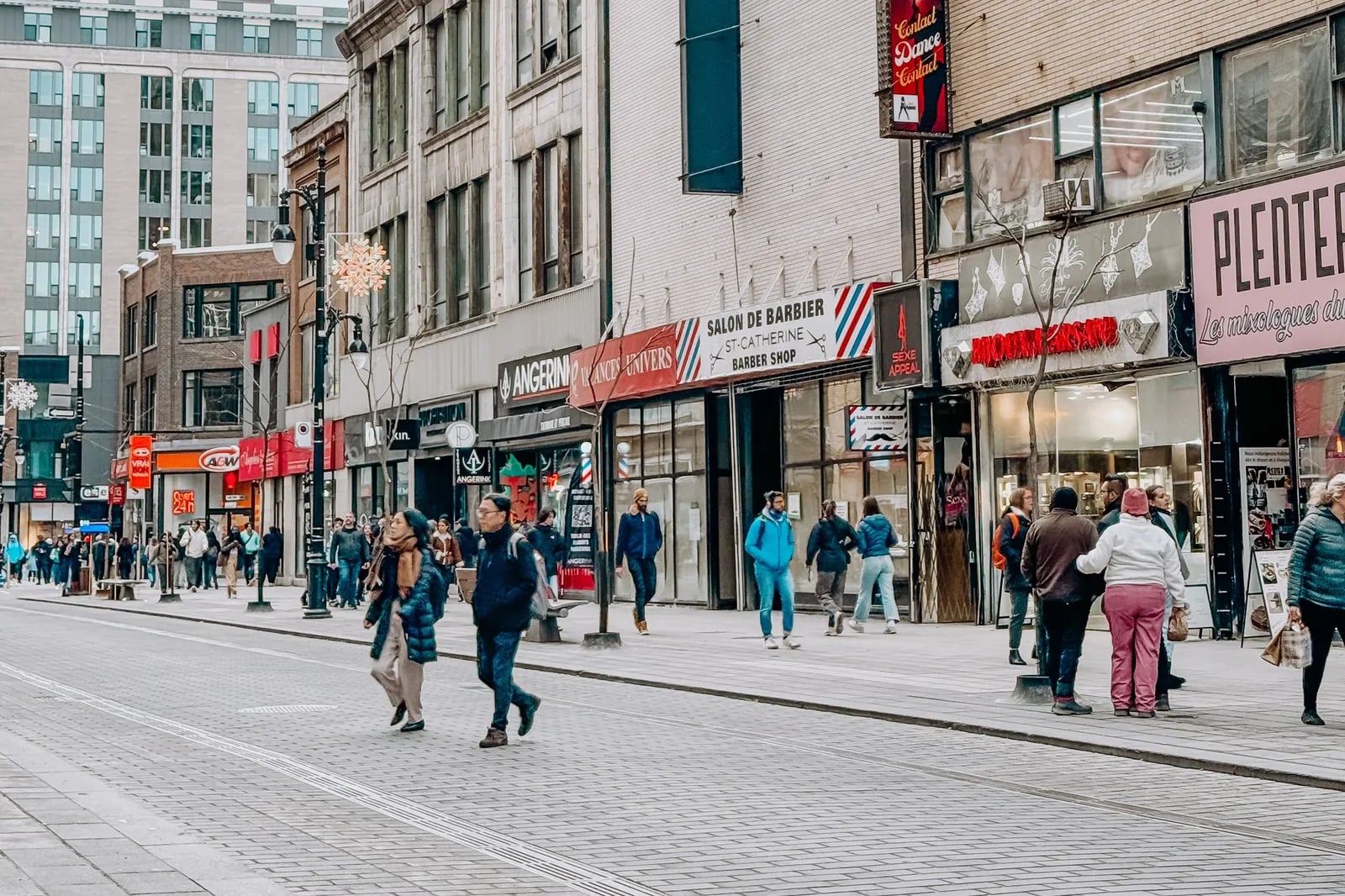
Downtown is for shopping, museums, nightlife and transport, and it has the most hotels at different prices. Sainte-Catherine Street is more than 11 km long with over 1,200 businesses and nine metro stations. The Quartier des Spectacles stretch is pedestrian all year, and the McCord Stewart Museum charges C$22 at the door or C$20 online and is closed Mondays. In winter the underground city lets you cross much of downtown without going outside. The walk from one district to the other is short, so visit both, and let the weather decide the order.
Eating is part of the choice. Old Montreal has Gibbys on Place d'Youville (open since 1969), Olive et Gourmando on Saint-Paul West (no reservations) and Club Chasse et Pêche on Saint-Claude, which serves Tuesday to Saturday evenings. Downtown has Time Out Market in Centre Eaton, with 15 counters and 7 bars. On safety, downtown is generally safe with the usual care against pickpockets, and many visitors avoid crossing Place Émilie-Gamelin near Berri-UQAM alone late at night. For more tables, see the best restaurants in Montreal.
The Plateau and Mile End: the neighborhood side of Montreal
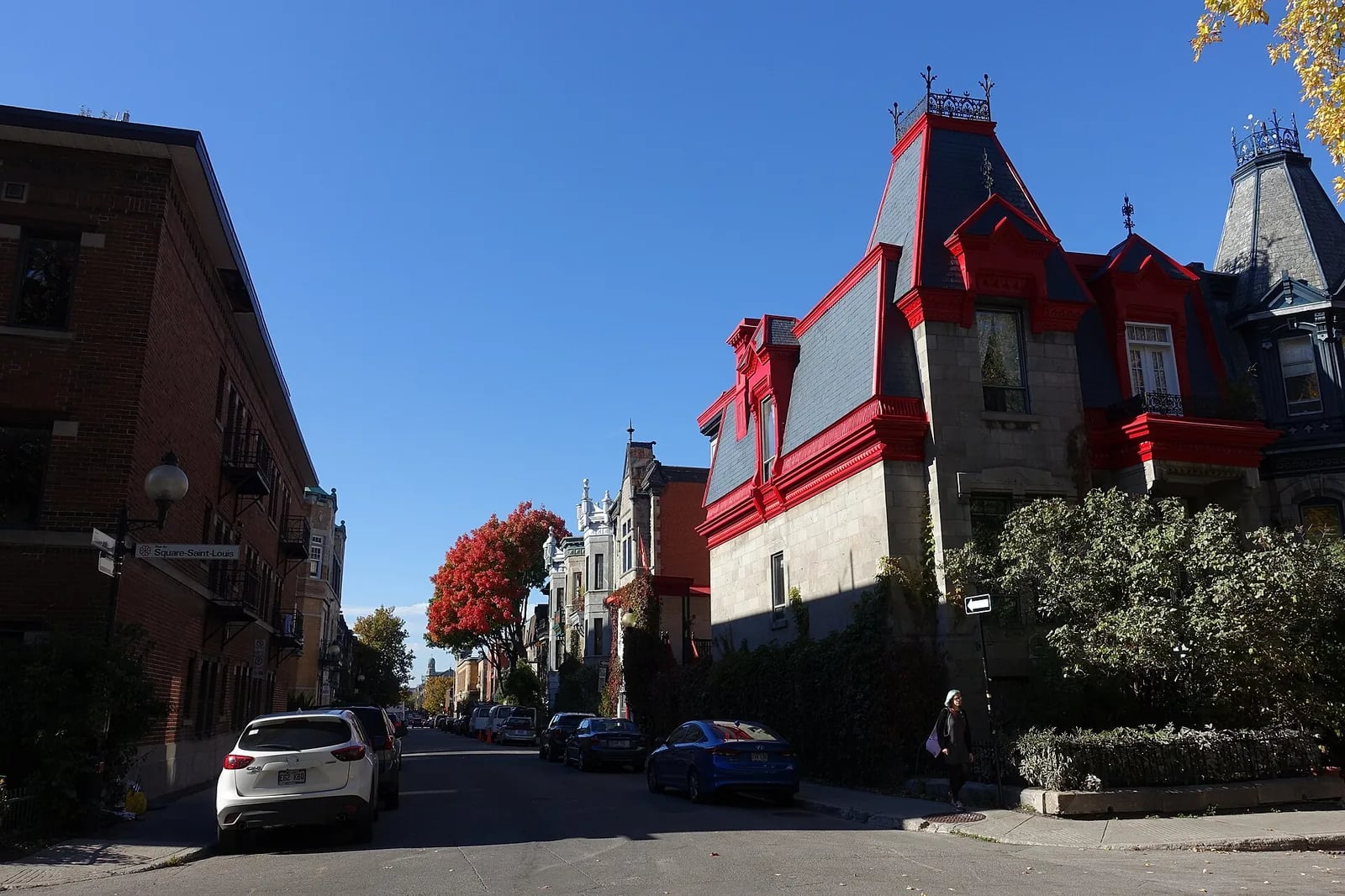
The official Plateau-Mont-Royal borough covers about 8.1 square kilometers, and Mile End is a district inside it. When a Montrealer says the Plateau, they usually mean the blocks between Sherbrooke, Mont-Royal Avenue and Saint-Denis around Parc La Fontaine, with the outdoor staircases that gave the area its look. Saint-Laurent Boulevard, called The Main, runs through the middle.
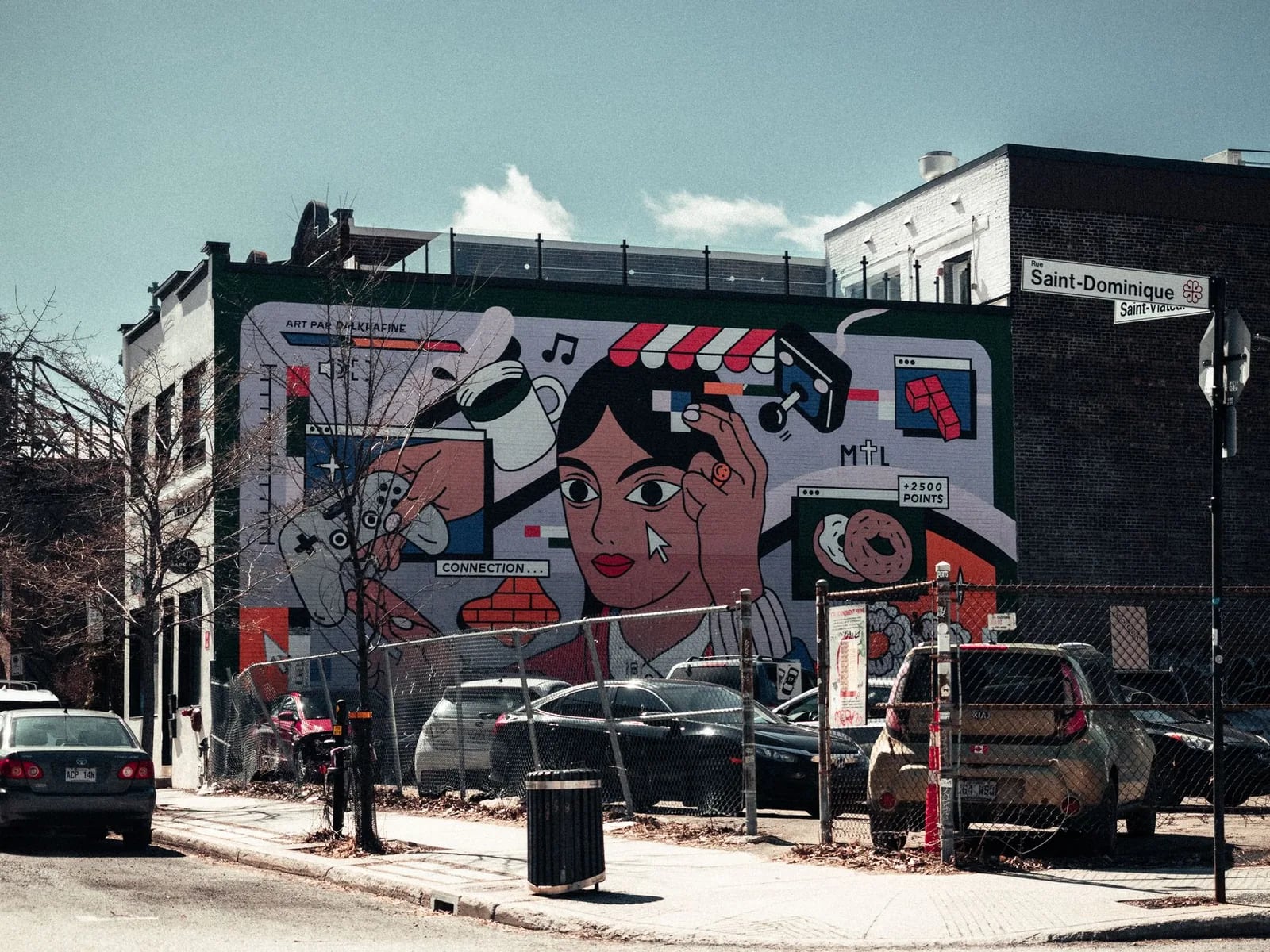
Mile End has no official limits, but visitors know it for two bagel bakeries (St-Viateur at 263 Saint-Viateur West, open 6 a.m. to midnight, and Fairmount at 74 Fairmount West), Café Olimpico at 124 Saint-Viateur West, and the murals, with the MURAL festival held in June on Saint-Laurent. Both neighborhoods have few hotels, so most visitors sleep elsewhere and arrive by metro. Our Montreal bagels guide compares the two bakeries, and the Mount Royal guide shows the park that borders the Plateau on its west side.
How to combine neighborhoods in one or two days
The efficient pairings follow the metro. Old Montreal and the Old Port make a half day, then downtown takes the afternoon if you want a museum. The Plateau and Mile End fit one day with a lunch stop: start at Sherbrooke or Saint-Laurent, walk to Square Saint-Louis and Parc La Fontaine, pass Schwartz's on Saint-Laurent, and finish at Mont-Royal metro. With a second half day, climb Mount Royal and go back down through the Plateau.
A good two-day plan is Old Montreal and downtown on the first day, and the Plateau, Mile End and Mount Royal on the second, since everything on that side is open on Monday. The Montreal itinerary turns the pairings into a day-by-day plan, and the things to do in Montreal guide ranks the sights inside each area.
When each neighborhood is at its best
Old Montreal is easiest from late spring to October, when the pedestrian streets and terraces are open, and it has a second high season in December: the Old Port craft market runs on the weekends of November 27 to 29 and December 4 to 6 in 2026, and Igloofest returns from January 14 to February 6, 2027. Downtown has the free Grand Marché de Noël at Place des Festivals from November 13, 2026 to January 3, 2027, and the LUMINO light installations from January 21 to March 7, 2027.
The Plateau is best from June to September, with the Mont-Royal Avenue pedestrian street and the Duluth terraces, and its stairs turn icy in winter. In Mile End, June has the murals and the best walking weather, and the Marché des Possibles ran from August 14 to September 20 in 2026. The bakeries and cafes are open all year. For the full calendar, see the Montreal festivals guide.
Where to sleep and guided walks
Choosing the area to sleep in matters more than the hotel. Old Montreal suits a first visit and couples, downtown suits winter and shopping, and the where to stay in Montreal guide compares all of them. If you would rather walk with a guide, Montreal city tours compares the walking, bike, bus and boat formats, and walking is the one format that does not stop in winter.
In this section
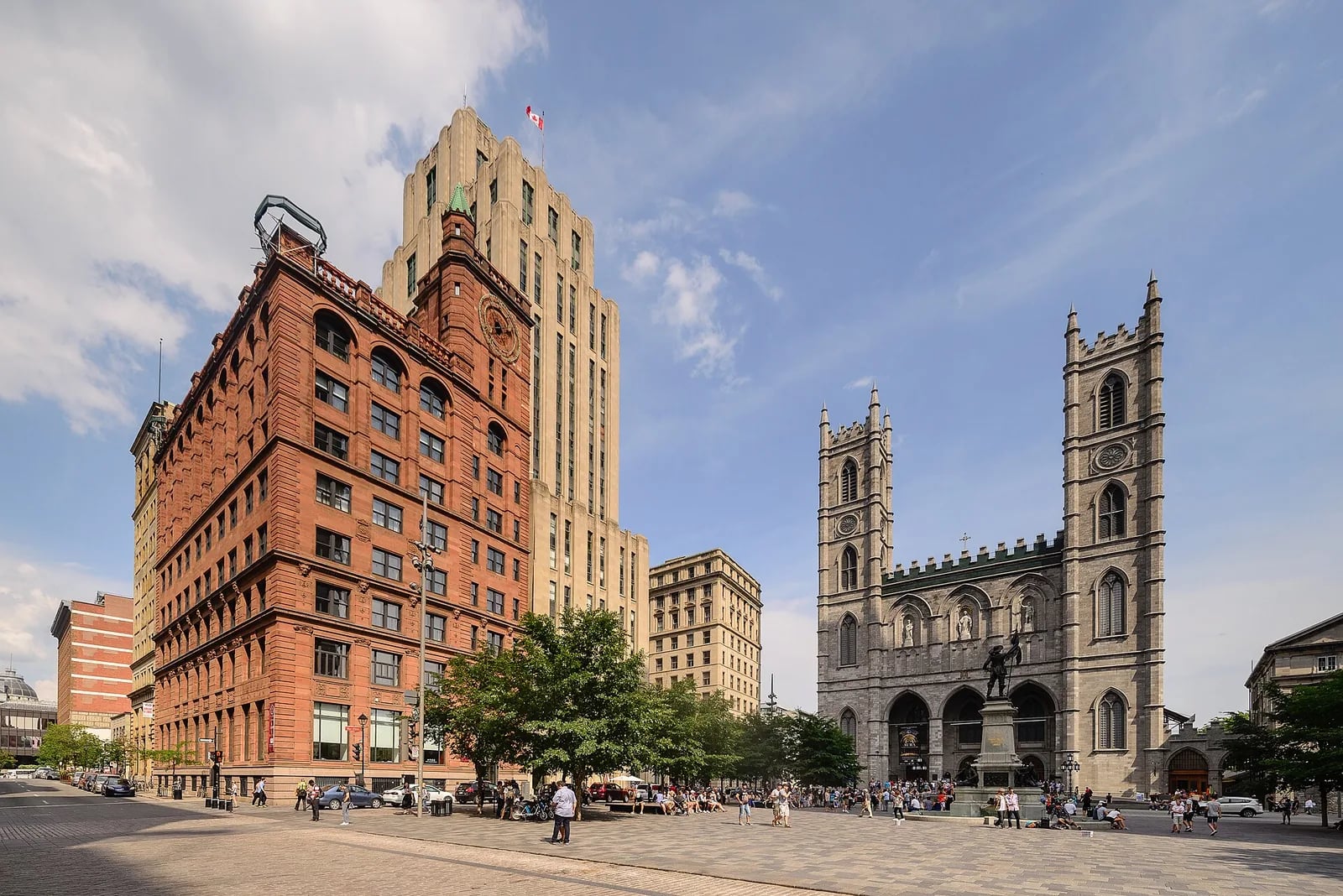 Photo Arild Vågen, CC BY-SA 4.0, Wikimedia Commons
Old Montreal on foot: what to see, a walking route from Place d'Armes to the Old Port, 2026 hours and prices, best streets, where to eat and how to get there.
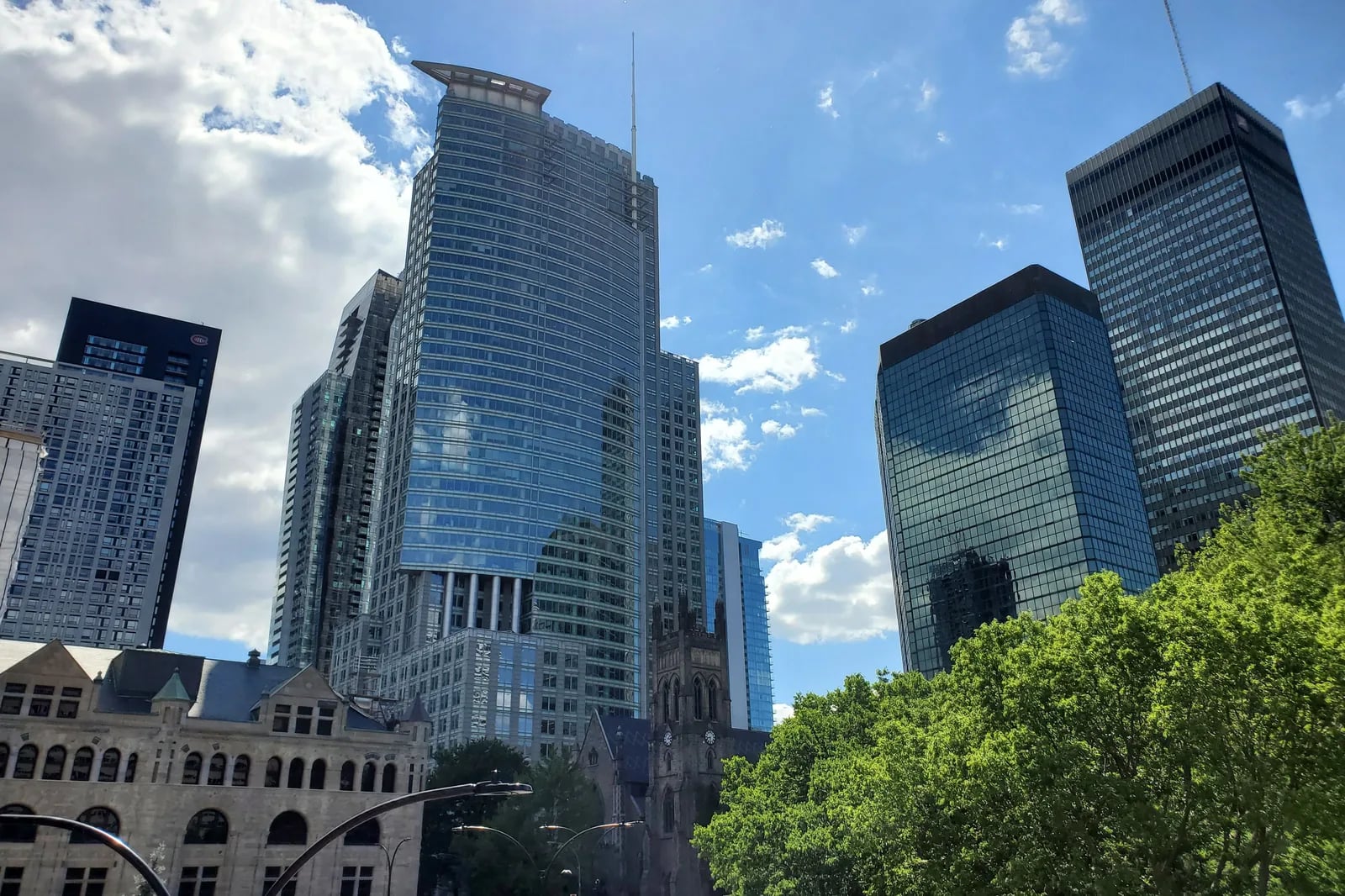 Photo German Korb, Pexels
Downtown Montreal for visitors: Sainte-Catherine Street by section, Quartier des Spectacles, McCord Stewart prices, malls, where to eat and a one-day walk.
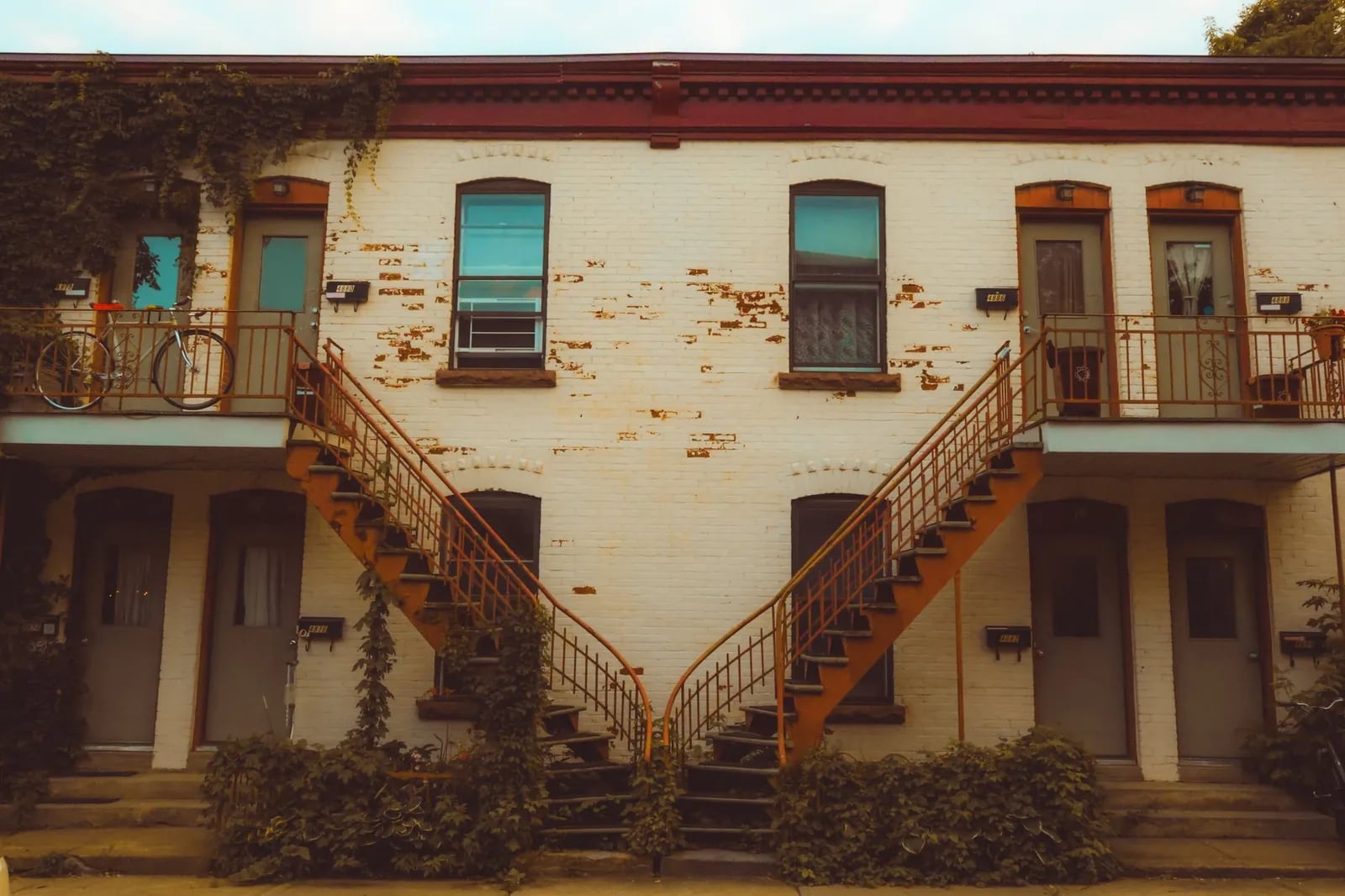 Photo Yannick, Pexels
The Plateau Mont-Royal in Montreal: its colorful staircases, Saint-Denis and Mont-Royal avenues, parks, cafes and restaurants, and a walk through the area.
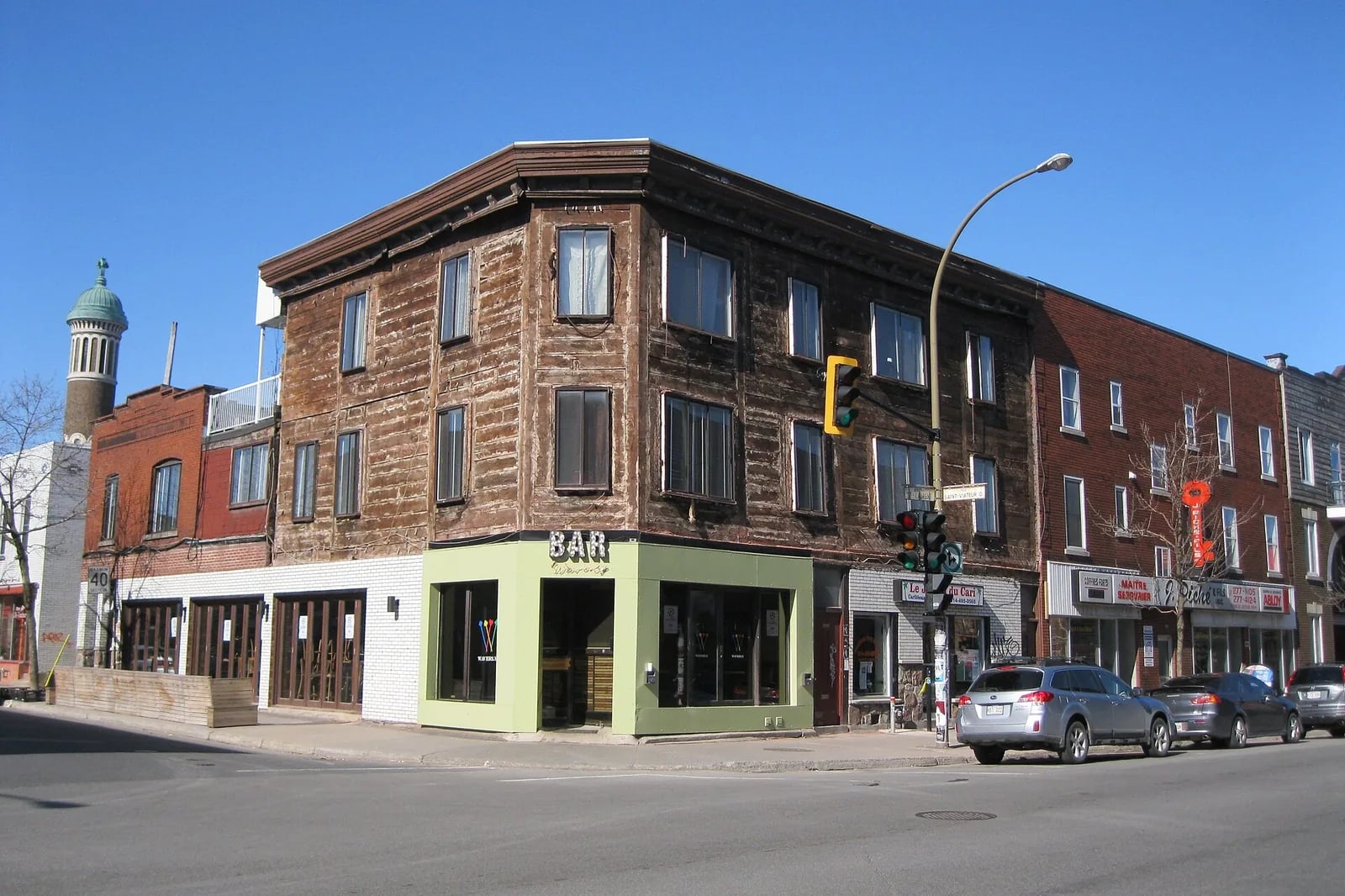 Photo Jeangagnon, CC BY-SA 3.0, Wikimedia Commons
Mile End in Montreal: a walking route with addresses, the bagel bakeries, cafes, bookshops, murals and venues, what is open and how to get there.