- Parc La Fontaine
- 34 ha
- Park open 6 a.m. to midnight
- Free
- Single metro fare
- C$3.75
On this page
The Plateau-Mont-Royal is the residential neighborhood just north of downtown, known for its colorful row houses with outdoor spiral staircases, its big park and its two shopping streets, Saint-Denis and Mont-Royal. It is a place to walk for half a day, mostly free, with the orange line metro at three of its corners. Below, what to see in order, where to eat, how it works by metro and BIXI, and what changes by season, checked in November 2026.
Plateau tours and activities
GetYourGuide's Plateau-only walks do not have many reviews yet, so these three well-reviewed tours cover the neighborhood's edges: Mile End food, an e-bike tour and a ride on Mount Royal, which borders the Plateau.

from $74 per person
Montréal: Mile End Foodie Tour with Tasting
A food tour of Mile End with tastings, about 3 hours.
4.9(390 reviews)3 hours
- Free cancellation
from $76 per person
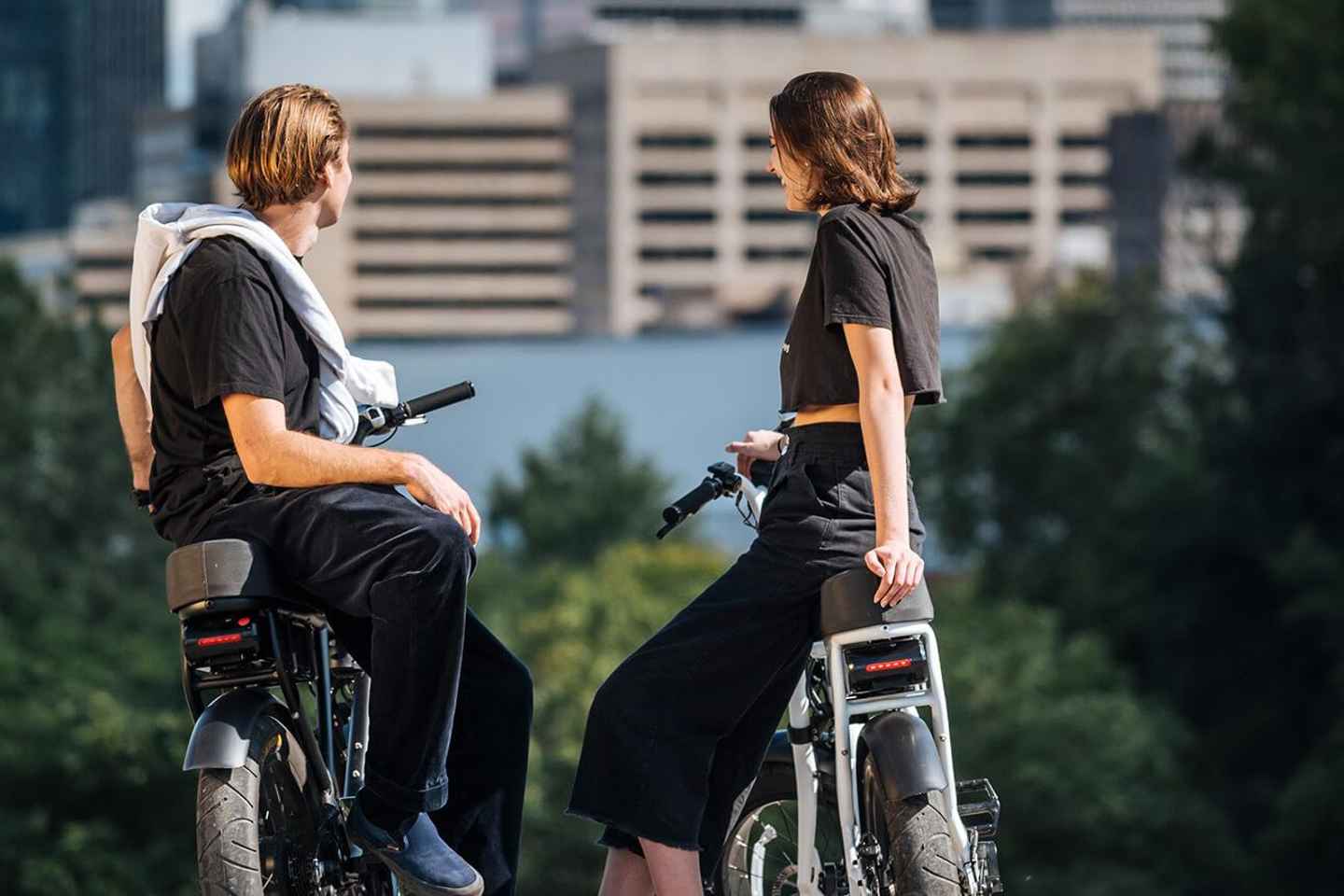
Montreal: E-Bike Sightseeing Tour
An e-bike sightseeing tour of Montreal, about 3 hours.
4.8(449 reviews)3 hours
- Free cancellation

from $62 per person
Montréal: Electric Fat Tire Bike Ride on Mount Royal
An electric fat tire bike ride on Mount Royal, about 2 hours.
4.8(154 reviews)2 hours
- Free cancellation
See more activities in Montreal
Where the Plateau is and what counts as the Plateau
The official Plateau-Mont-Royal borough covers about 8.1 square kilometers. Its limits run along Sherbrooke Street in the south, University Street and Pine Avenue in the southwest, Parc Avenue in the west and the Canadian Pacific tracks in the north, with Outremont to the west and Rosemont-La Petite-Patrie to the north and east.
On paper, that includes Mile End and Milton Park. In practice, when a Montrealer says "the Plateau", they mean the blocks between Sherbrooke, Mont-Royal Avenue and Saint-Denis Street around Parc La Fontaine. The spine of the area is Saint-Laurent Boulevard, called The Main, a street of 11 km that was named a National Historic Site of Canada in 2002. Street numbers start from it, so an address marked "East" is east of the Main.
One point of confusion: Place-des-Arts and Saint-Laurent stations are on the green line and sit south of Sherbrooke, outside the Plateau. The Plateau's own stations are on the orange line.
Plateau outdoor spiral staircases: why they exist
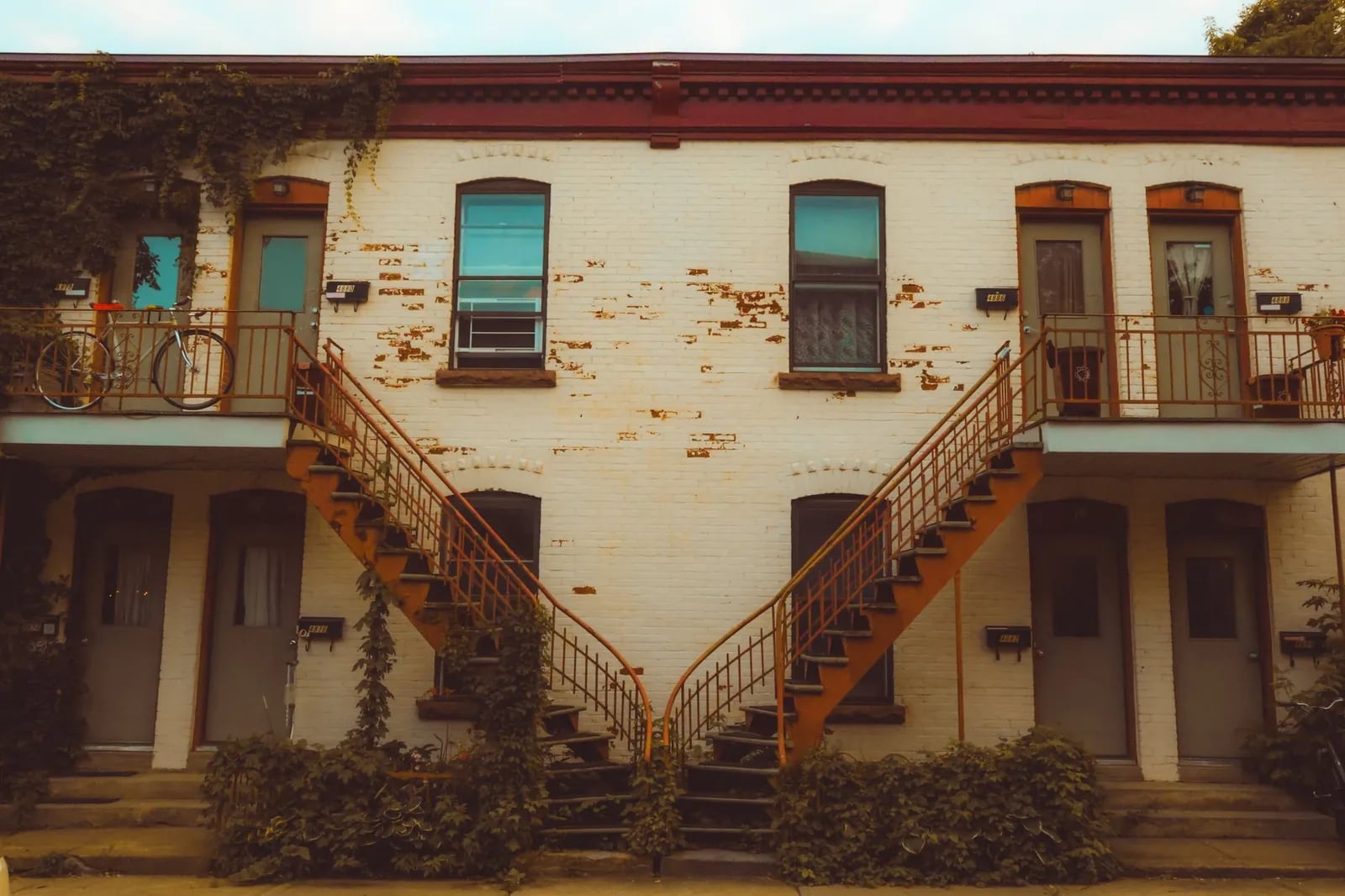
Nobody planned the staircases as decoration. A building rule from the 1880s required houses to be set back from the street, and an outdoor staircase saved interior space in rows of flats where the population was doubling about every ten years between 1840 and 1880, according to a guide quoted by Daily Hive. The typical plex had a large ground-floor flat that the owner kept and rented the upper floors, and the staircase gave each floor its own entrance. The Pointe-à-Callière museum listed them among the emblematic symbols of the city in 2012.
The rules on them today are practical. The city sets guard rails at 90 cm and 107 cm when the platform is more than 180 cm above the ground, requires two handrails on spiral staircases and on any staircase wider than 110 cm, and asks for a permit when a staircase reaches over the sidewalk. Several sources give conflicting dates for restrictions on new outdoor stairs in the twentieth century, so the exact years are not something to quote.
For the best staircase streets, wander between Mont-Royal Avenue and Rachel Street, on the side streets that run east to west off Saint-Denis. Brightly colored houses are all through the area, and murals add to it along Saint-Laurent, where the MURAL festival takes place in June.
Parc La Fontaine: hours, theater and skating
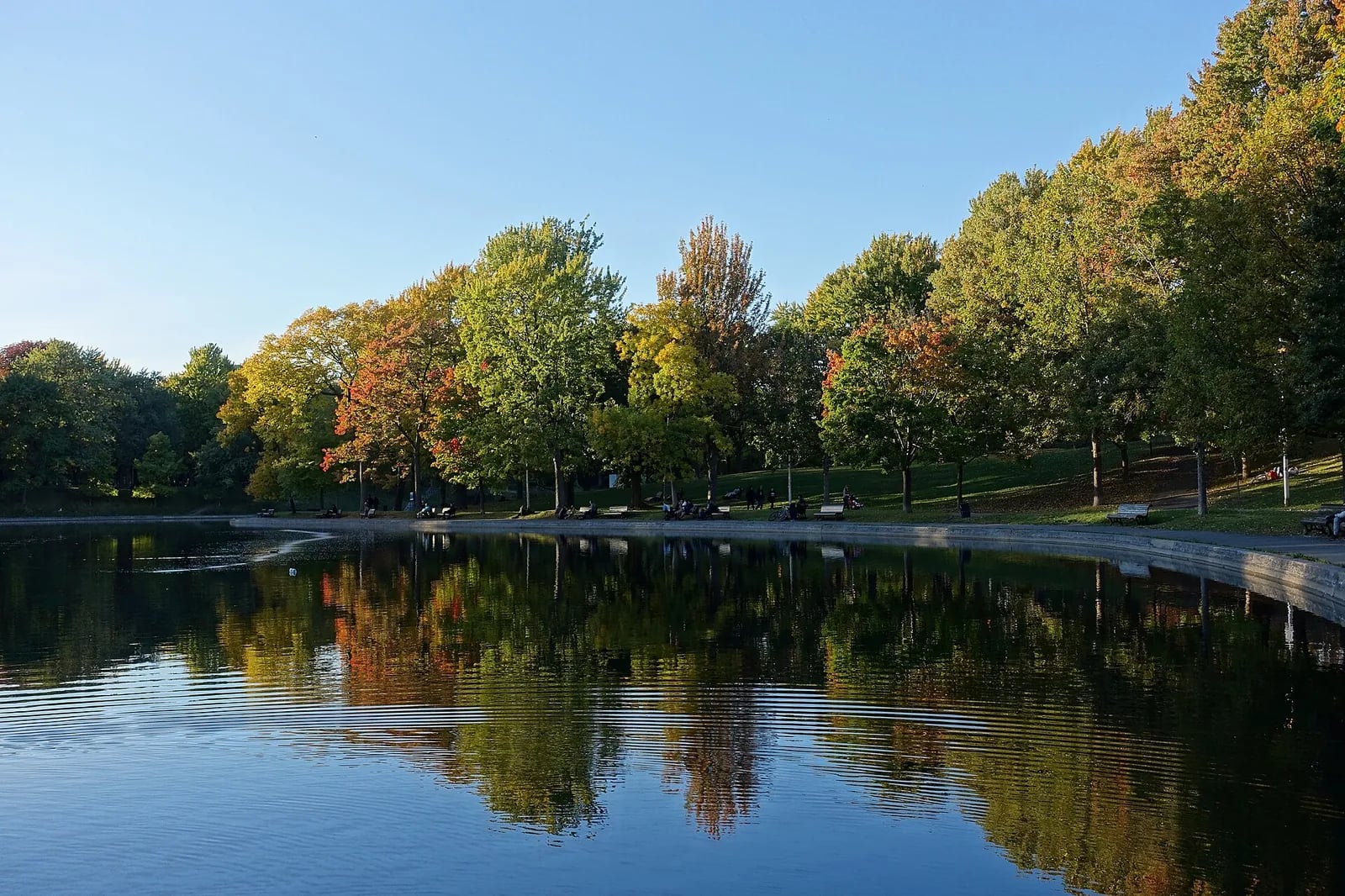
Parc La Fontaine covers 34 hectares (84 acres) and is open 6 a.m. to midnight every day, according to the city. It was a farm that the Canadian government bought in 1845 and used for military drills until 1888. It opened as Logan Park in 1874 and took its present name in 1901. The two ponds, dug at different levels in 1900, are the heart of it, and the illuminated fountain dates from 1929.
- Théâtre de Verdure. An open-air amphitheater of about 2,000 seats, according to the city, which reopened on June 30, 2022. Its free shows run Wednesday to Saturday, and the 2026 season ran June 11 to August 26. Doors open about 30 minutes before, and access closes when it is full, so arrive early for big evenings. The 2027 program is not published yet.
- Winter. Four skating rinks (a pond for free skating, the chalet rink, and two hockey rinks) and two cross-country ski trails of 2.2 and 3 km. Check the city page for skate rental and opening dates before you go.
- Play and picnic. Playgrounds, two pétanque courts, picnic tables, a snack bar and free Wi-Fi. Dogs must be on a leash, with fines up to C$600.
Works. In spring 2026 the city said the park fountain was out of service pending a renovation project and the two wading pools on Rachel Street East were closed, so check before you plan a summer afternoon around them. There is no library inside the park. The Plateau-Mont-Royal library is across from Mont-Royal metro station.
Mont-Royal Avenue: shops, cafes and summer pedestrian streets
Mont-Royal Avenue is the neighborhood's main shopping and cafe street, with a bus line (97) and the Mont-Royal metro station on it. Tourisme Montréal names, among others, the bakery Le Toledo at 351 Mont-Royal East, Aux 33 Tours (records) at 1373, Café Névé at 781 and L'Avenue, a brunch address at 922.
The city renewed the summer pedestrianization of the avenue in 2026. Cars were progressively removed from May 25 and the structures were dismantled in sections: from Resther to De Lorimier on September 8 to 10, from Saint-Denis to Resther on September 28 to 30, and from Saint-Denis to Saint-Laurent on October 12 to 15. Pedestrians have priority, and bikes, skateboards, scooters and skates are allowed at a slow speed. The program is announced each year, so check before planning a 2027 trip around it.
Saint-Denis Street and Square Saint-Louis
Saint-Denis Street between Gilford and Roy is the boutique and cafe stretch, with bookshops, Quebec fashion, galleries and theaters, served by bus 31. Tourisme Montréal lists La Binerie Mont-Royal (a Quebec classic since 1938, at 4167), the patisserie Zebulon at 4001, Café Myriade at 4627 and the Théâtre d'Aujourd'hui at 3900.
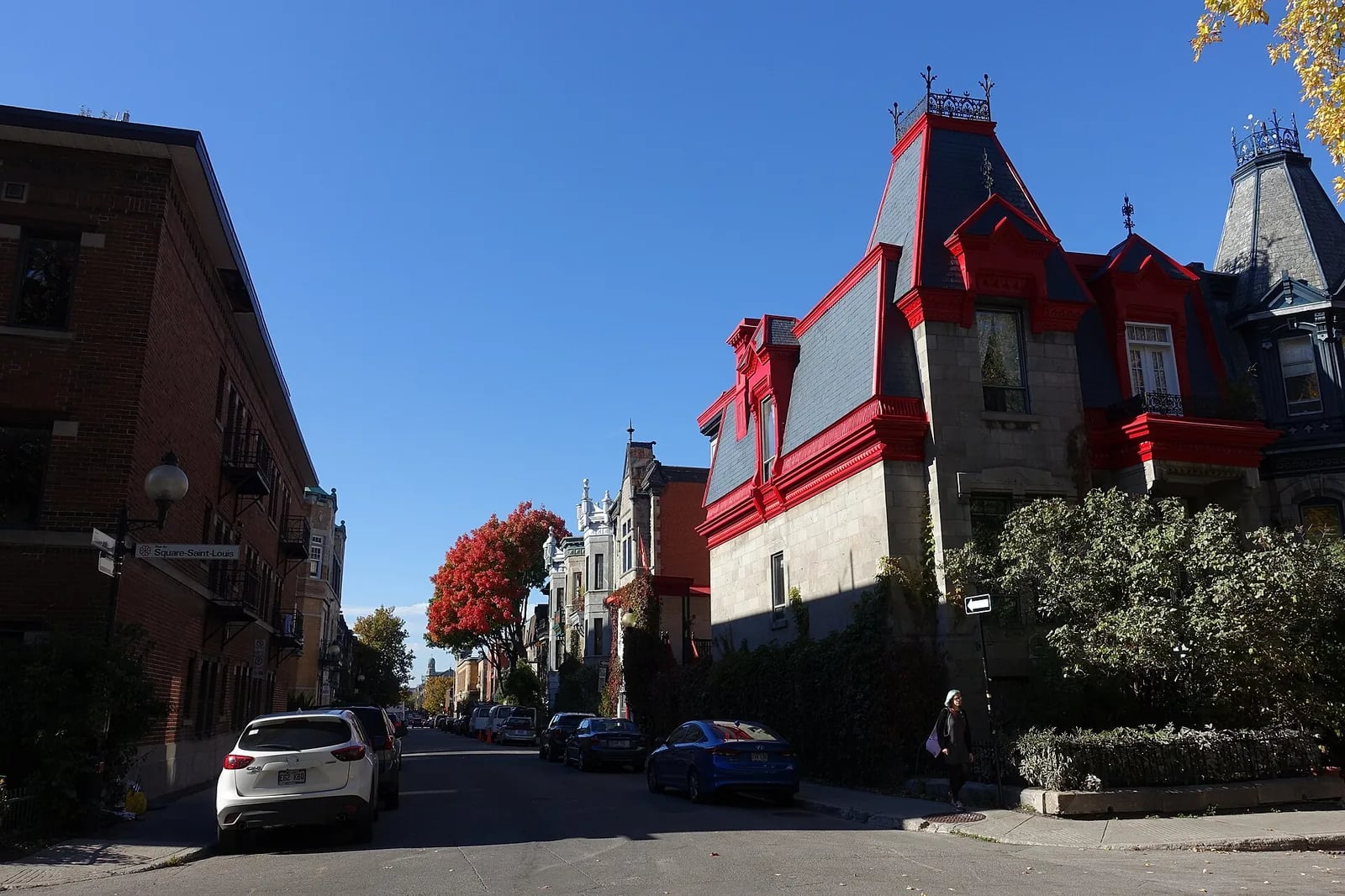
At the southern end, Square Saint-Louis was created in 1876 on the site of the old city reservoir. A cast-iron fountain by Jordan L. Mott, among the oldest public fountains in the city, stands in the middle, with busts of the poets Octave Crémazie and Émile Nelligan. Victorian houses surround the square, the hospitality school ITHQ faces it, and the pedestrian Prince-Arthur Street starts at its foot.
Where to eat in the Plateau: Schwartz's, poutine and Duluth
- Schwartz's, 3895 Saint-Laurent Boulevard, has sold smoked meat since 1928. Its site gives no prices or hours, so look at current listings. The full story is in our smoked meat guide.
- La Banquise, 994 Rachel Street East, is open 24 hours according to its own site and serves more than 28 kinds of poutine. Expect a line at peak times, and see the poutine guide for the rest.
- Duluth Avenue East is a brick-paved restaurant street, pedestrian in summer, where many places are BYOB. Tourisme Montréal names Au Pied de Cochon (536), La Prunelle (327, bring your own wine) and Zarina patisserie (68). Check hours before you go, as none were confirmed on official sites.
- Bagels live next door in Mile End. See Montreal bagels and the Mile End guide.
A walking route through the Plateau
This order runs from south to north and ends on a metro station. There are no set times, so give it half a day with a lunch stop.
- Start at Sherbrooke metro or Saint-Laurent, and walk to Square Saint-Louis.
- Walk north on Saint-Denis through the boutique stretch between Gilford and Roy.
- Cut across to Parc La Fontaine, along Rachel Street, and loop around the ponds.
- Lunch on Duluth or at La Banquise, then stroll the side streets for the staircases.
- Pass Schwartz's on Saint-Laurent, then climb to Mont-Royal Avenue.
- Finish at Mont-Royal metro, across from the library.
Getting to the Plateau by metro, bus and BIXI
The orange line stops at Sherbrooke, Mont-Royal and Laurier, and Mont-Royal station has an elevator. Buses 97 (Mont-Royal), 31 (Saint-Denis) and 11 also serve the area. The fares posted by the STM in November 2026:
| Ticket | Price | Good for |
|---|---|---|
| Single trip | C$3.75 | One trip |
| 10 trips | C$35 | Shared by a group |
| 24 hours | C$11.25 | A day of stops |
| 3 days | C$21.75 | A long weekend |
BIXI bikes are another way in. A trip costs C$1.60 to unlock plus C$0.21 a minute on a classic bike and C$0.36 on an electric one, before tax, according to BIXI. The system keeps a reduced network running in winter, so look at the map for open stations. For more ways to travel, see our Montreal tours guide.
Best time to visit the Plateau
June to September is the best stretch, with temperatures from about 17 to 22 °C (62 to 71 °F), the Mont-Royal Avenue pedestrian street, Duluth terraces and the Théâtre de Verdure shows. In winter, the park becomes a skating and cross-country skiing ground, but the staircases get slippery, so wear boots with grip. The area is quiet on early weekday mornings and busy on summer weekends, when the avenue is closed to cars.
If you are choosing where to sleep, the Plateau has few hotels and most visitors stay in Old Montreal or downtown, then come up by metro. Back in Old Montreal, the Old Montreal guide covers the other half of a classic city day.