- Year Montreal was founded here
- 1642
- Pointe-à-Callière, adult ticket
- C$30
- Place-d'Armes, Champ-de-Mars, Square-Victoria
- 3 metro stops
On this page
Old Montreal (Vieux-Montréal, also called the old town) is the historic district beside the St. Lawrence River, where the city was founded in 1642. It is free to walk, small enough to see on foot and best done in this order: Place d'Armes and the basilica, City Hall and Place Jacques-Cartier, Bonsecours Market and Rue Saint-Paul, then Pointe-à-Callière and the waterfront. Below, the route, opening hours and prices read in November 2026, and where to eat.
Old Montreal tours and activities
Guided walks are the quickest way to get the stories behind the stone, and these three start in the district.
from $24 per person
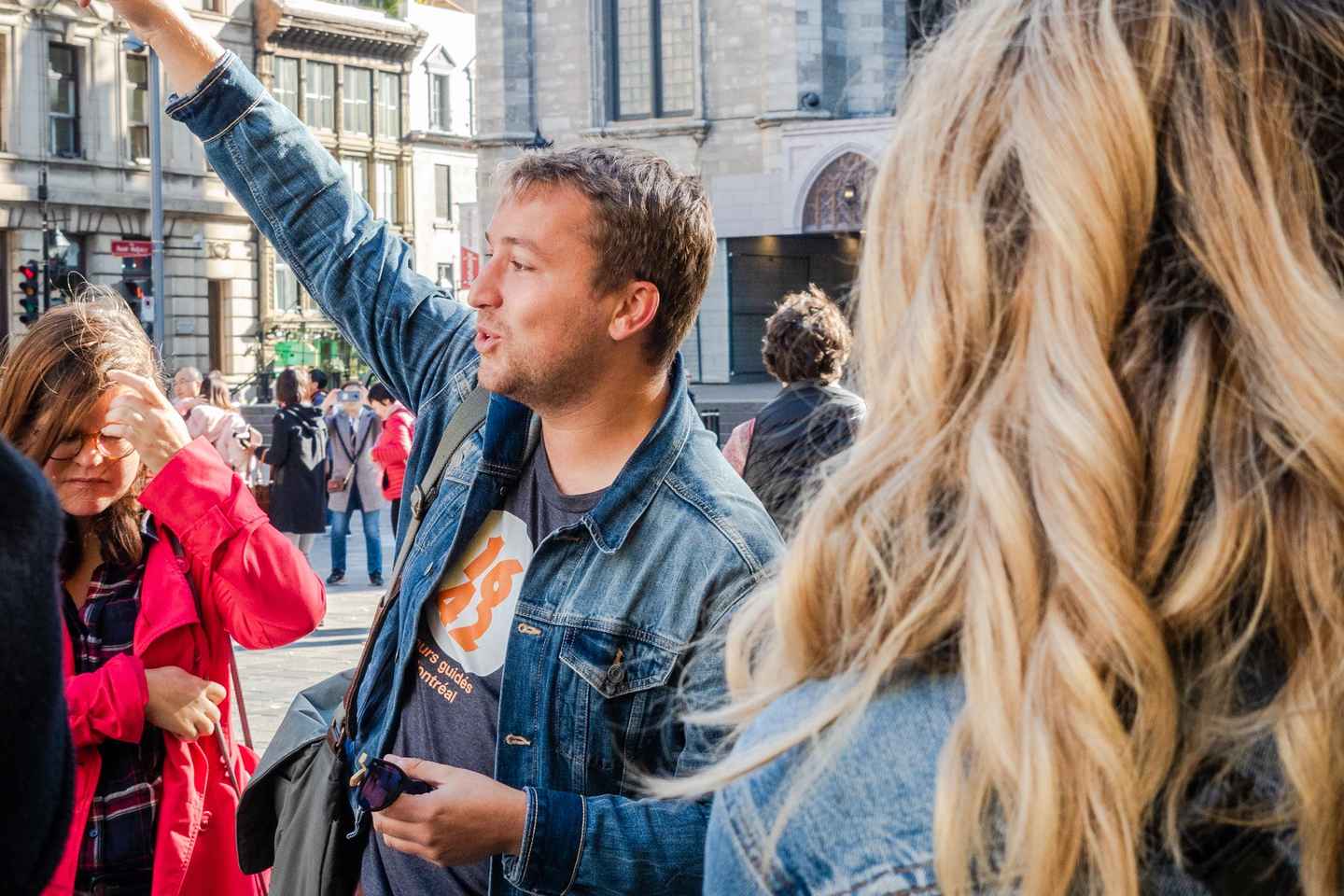
Montreal: Old Montreal Guided Walking Tour
A two-hour guided walk through Old Montreal, as its title says.
4.8(366 reviews)2 hours
- Free cancellation
from $37 per person
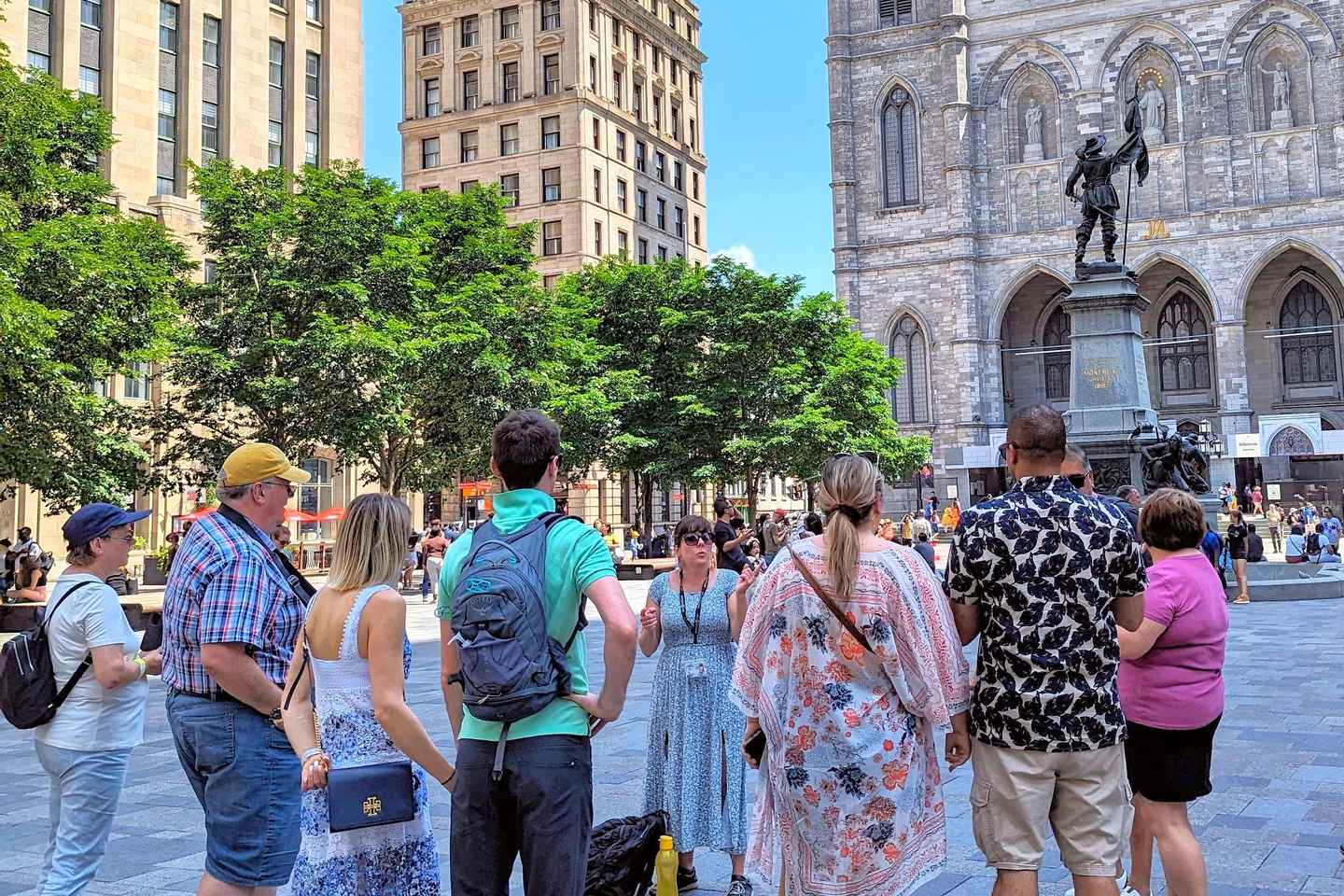
Old Montreal: Old Montreal Small-Group Walking Tour
A two-hour walking tour of Old Montreal in a small group.
4.9(830 reviews)2 hours
- Free cancellation

from $111 per person
Montreal: Old Montreal Food and Drink Guided Walking Tour
A three-hour guided walk through Old Montreal built around food and drink.
4.8(147 reviews)3 hours
- Free cancellation
See more activities in Montreal
What to see in Old Montreal
The settlement of Ville-Marie was founded in 1642 by Paul de Chomedey de Maisonneuve and Jeanne Mance, at the spot now occupied by the Pointe-à-Callière museum. The fortifications that once surrounded the town were ordered demolished in 1804 and the work finished in 1815, which is why the district today is a grid of narrow streets rather than a walled city. In 1964 most of it was classified as a historic district.
The area is bounded by the river to the south, Rue Saint-Antoine to the north (once the Canadian "Wall Street") and Rue McGill to the west. One thing confuses many visitors: the Old Port is not the same as Old Montreal. The port is the waterfront park on the river side of Rue de la Commune, with the Grande Roue and the boat docks, and it has its own page in our Old Port guide.
The sights worth stopping for, from west to east:
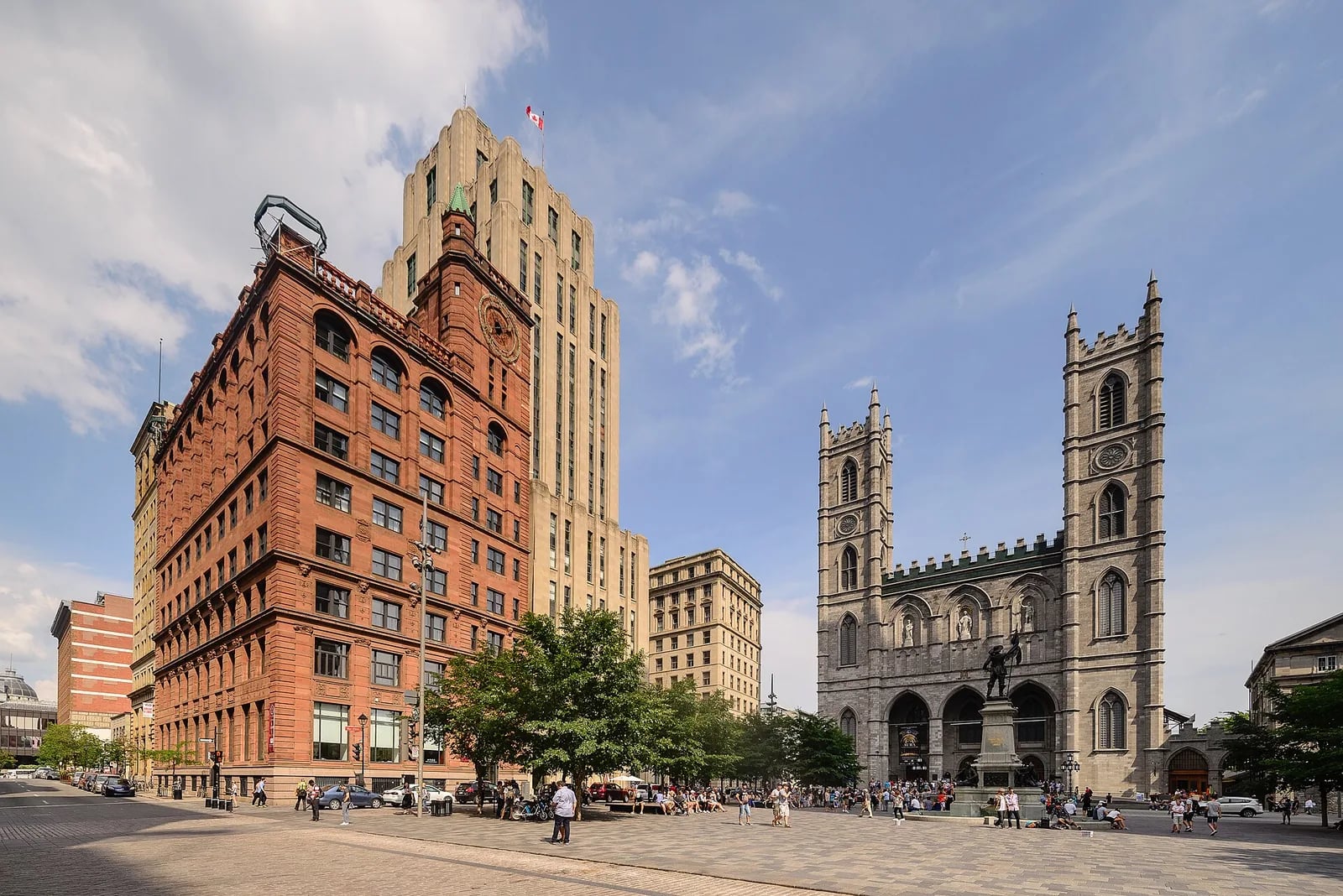
- Place d'Armes, the square in front of the basilica, with the Maisonneuve monument, the Art Deco Aldred Building and the Bank of Montreal.
- Notre-Dame Basilica, the blue and gold church that is the district's landmark. Prices, hours and the AURA light show are in our Notre-Dame Basilica guide.
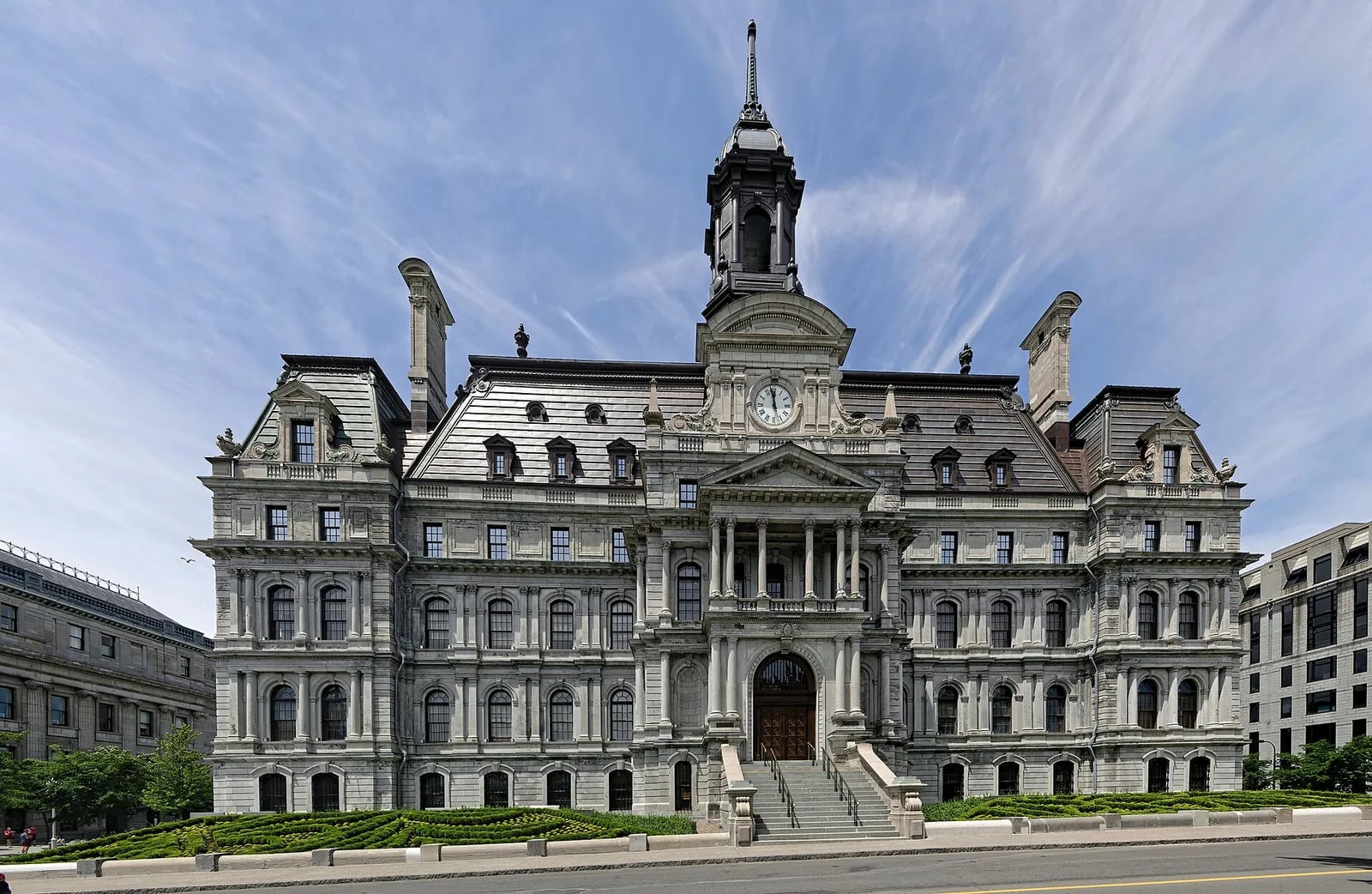
- Montreal City Hall on Rue Notre-Dame Est, built between 1872 and 1878 in the Second Empire style. General de Gaulle shouted "Vive le Québec libre" from its balcony in 1967. Entry is free.
- Champ-de-Mars, the park behind City Hall, where the stone lines in the lawn are the foundations of the old fortifications, found during the restoration of the park in 1992.
- Château Ramezay, at 280 Notre-Dame Est, a museum in a building put up in 1705 for the governors of the colony.
- Place Jacques-Cartier, the sloping square lined with 17th and 19th century houses, which became the Marché Neuf market in 1804 and took its present name in 1845.
Old Montreal walking route
This loop starts at the Place-d'Armes metro station and ends at the Old Port. Walk it in this order so that you go downhill toward the river and finish with a view.
- Place d'Armes and the basilica. Look at the square first, then decide whether to go inside. Visiting in the morning is easier than at the end of a long day.
- Rue Notre-Dame Est. Head east past the old courthouse (155 Notre-Dame Est, 1856, with a dome added in 1891), City Hall at number 275 and Château Ramezay at number 280.
- Place Jacques-Cartier. Walk down the slope to Rue de la Commune and the river. In summer the square is full of terraces and street artists.
- Rue Saint-Paul Est. This is the stretch with Bonsecours Market (number 350) and, a bit further east, the Notre-Dame-de-Bon-Secours chapel (number 400).
- Back along Rue Saint-Paul Ouest to Place Royale. This leads to Pointe-à-Callière, then Place d'Youville, the old market square where the Parliament of the Province of Canada met until it burned in 1849.
- The Old Port. Finish on the waterfront. The Champ-de-Mars metro station is the closest to the start of the loop, and Square-Victoria-OACI is the closest to the end.
We do not give walking times because they depend entirely on how long you stay inside: the museum alone takes well over an hour. The Old Port publishes its own walking distances to the metro: about 8 minutes from Champ-de-Mars, 14 minutes from Place-d'Armes and 16 minutes from Square-Victoria-OACI.
Old Montreal hours and prices: Pointe-à-Callière, Bonsecours Market and the chapel
Hours below are the winter schedule shown on each site in November 2026, and they change with the season.
| Site | Hours (Nov. 2026) | Entry |
|---|---|---|
| Pointe-à-Callière | Tue-Fri 10-5, Sat-Sun 11-5 | Adult C$30 |
| Bonsecours Market | Mon-Wed 10-6, Thu-Sat 10-7, Sun 10-6 | Free |
| Bon-Secours chapel (museum) | Tue-Sat 11-5, Sun 10-5 | Chapel free |
Pointe-à-Callière (350 Place Royale) is the archaeology and history museum of Montreal, opened in 1992. Its rates include taxes: adult C$30, senior 65+ C$27, young adult 18 to 30 C$20, teen 13 to 17 C$15, child 5 to 12 C$10, free under 5, and a family ticket at C$60. It is closed on Mondays, tickets stop selling 60 minutes before closing, and on Wednesdays seniors pay C$21.60. The visit goes down under the square to the ruins of Fort Ville-Marie and a section of the old sewer, and the rooftop panorama gives a 360 degree view over the river.
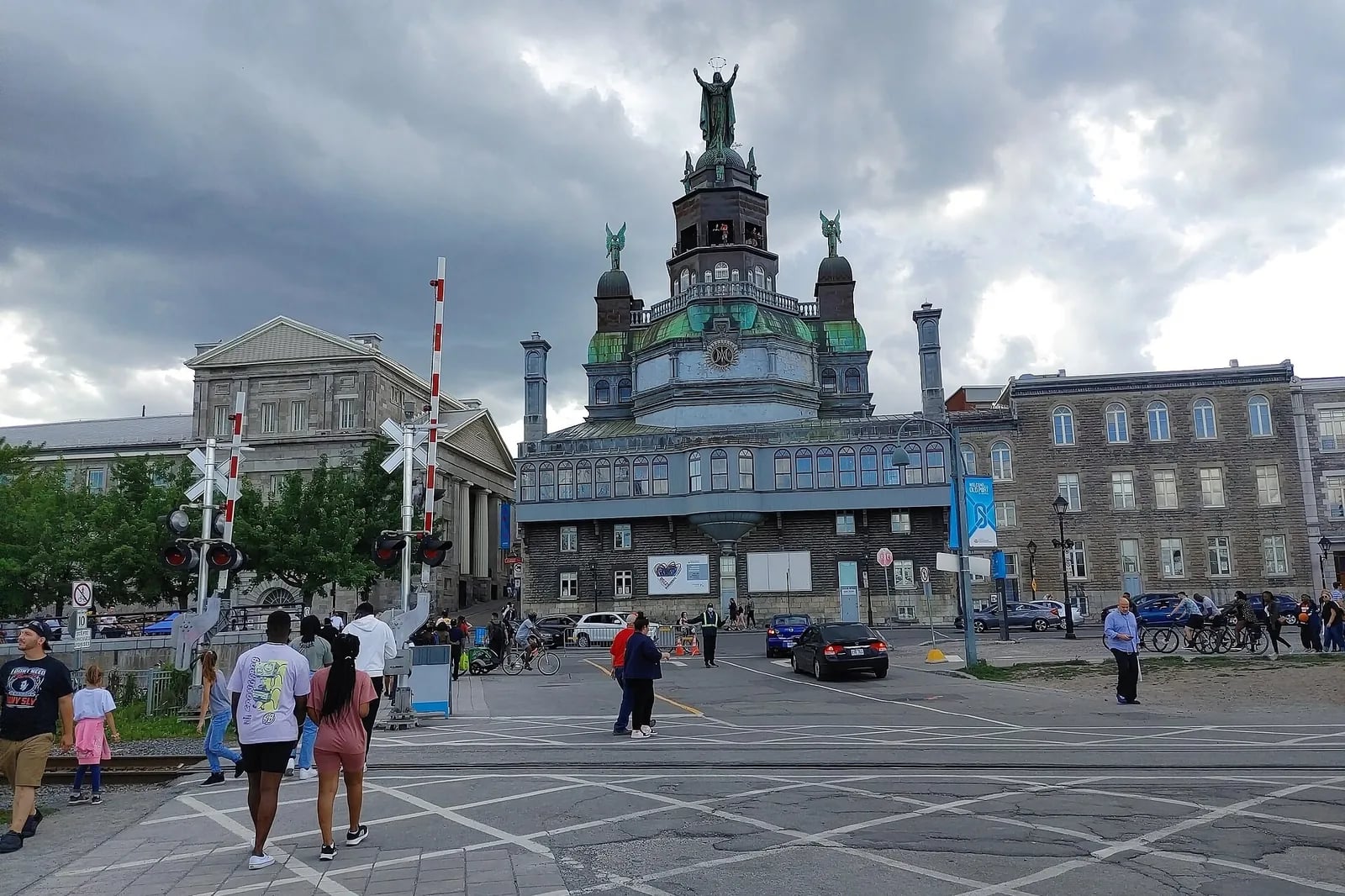
Bonsecours Market (350 Rue Saint-Paul Est) is the silver-domed building you see from the waterfront. It opened in 1847, served as City Hall from 1852 to 1878 and was a National Historic Site from 1984. Today it holds about 15 boutiques of Quebec crafts and a few restaurants.
The Notre-Dame-de-Bon-Secours chapel (400 Rue Saint-Paul Est) dates from 1771 and stands on the foundations of a stone chapel from 1675. Sailors called it their church. The chapel is free, the museum and the tower with the view of the Old Port are ticketed, and the site is closed on Mondays in winter and on December 24, 25, 26 and 31, January 1 and 2.
Is Old Montreal worth visiting?
Yes, with one condition: go for the buildings and the museums, not for the souvenir shops. The district is the reason many visitors come to Montreal, it costs nothing to wander, and a first-time visitor can see the main streets in half a day. The sights that cost money are optional. If you only choose one, make it Pointe-à-Callière for the history or the basilica for the interior.
What to skip: the lobster restaurants on the most touristy squares, and the large uniformed "free tours" if you want a smaller group. Our guide to Montreal city tours compares the walking, bike, bus and boat options. For a rainy day, the underground city is the warm option. The other main area for visitors is downtown Montreal.
Best streets to walk in Old Montreal
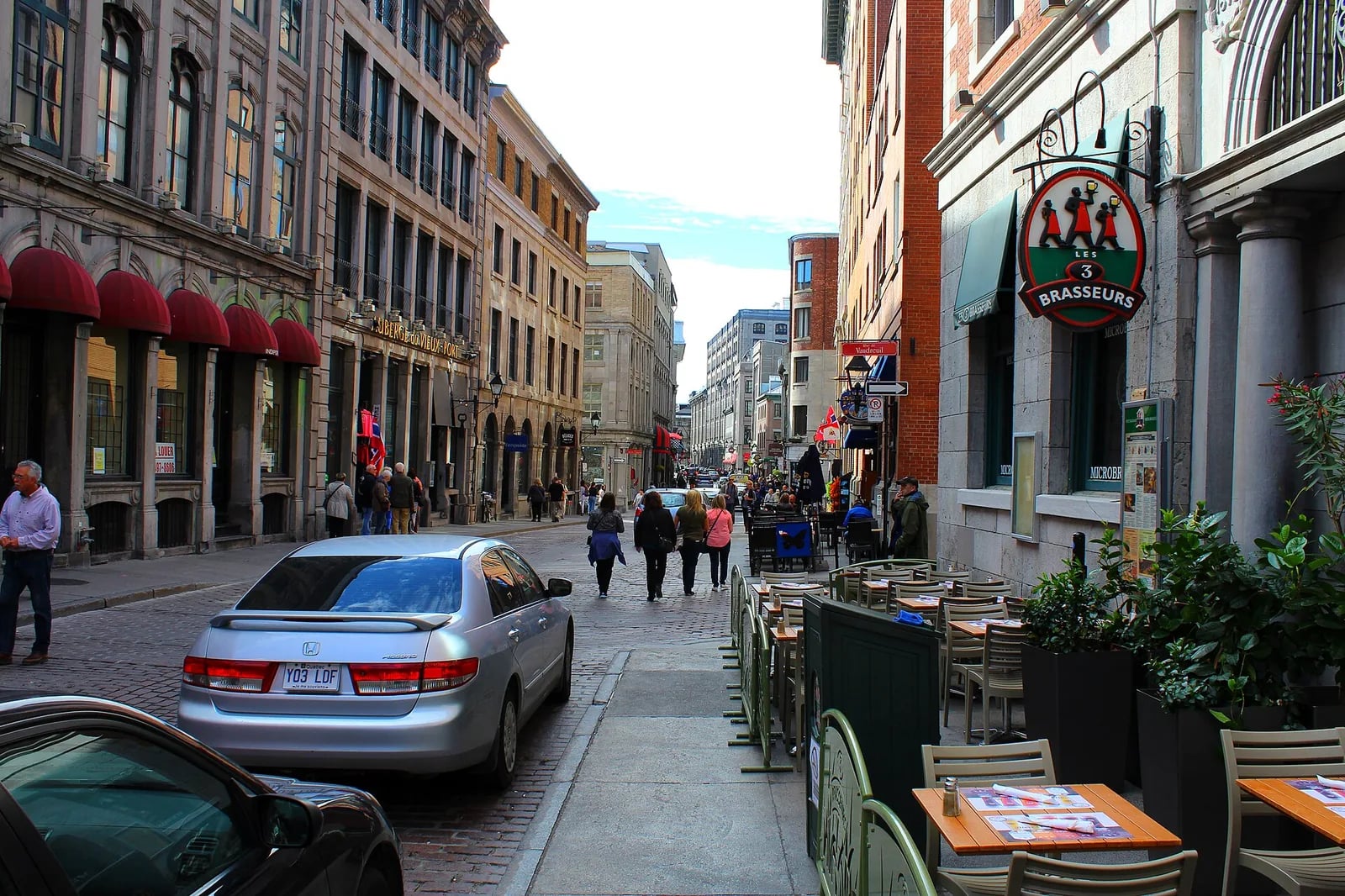
Rue Saint-Paul is the street to pick. It is part of the first street grid, laid out by François Dollier de Casson in the 17th century, and it runs along the old waterfront past galleries, boutiques and cafes. In 2026, Rue Saint-Paul Est and Place Jacques-Cartier were closed to cars from April 15 to October 29, according to Tourisme Montréal. Rue Saint-Paul Ouest stays a shared street with traffic, so only the eastern stretch is truly pedestrian. Dates for 2027 are announced by the city each year.
For quieter facades, go up to Rue Sainte-Hélène, and for river views take the boardwalk of the Old Port. Horse-drawn carriages no longer operate in Montreal after the city banned them around 2020, so older blog posts that recommend them are out of date.
Where to eat in Old Montreal
The rule that works: eat one block away from Place Jacques-Cartier. These places were open and listing their hours on their own sites in November 2026.
- Olive et Gourmando (351 Rue Saint-Paul Ouest) is a bakery and sandwich counter with no reservations, first come first served. Go outside the 12 to 1 p.m. rush. Opening hours vary from day to day, so check its site before queuing.
- Gibbys (298 Place d'Youville) has been open since 1969. It opens at 11:30 a.m. most days and at 4:45 p.m. on Mondays, and it takes reservations.
- Le Club Chasse et Pêche (423 Rue Saint-Claude) is the expensive French dinner, open Tuesday to Saturday evenings only.
- Auberge Saint-Gabriel (426 Rue Saint-Gabriel) is housed in an inn built in 1688 and first licensed to sell alcohol in 1754. It serves dinner from 5 p.m., Monday to Saturday, and takes online reservations.
More choices across the city, from smoked meat to bagels, are in our Montreal restaurants guide. If you are planning to stay in the district, the list of hotels in Old Montreal is organized by street.
When to visit Old Montreal: summer, Christmas and winter
Summer is the easiest season, with the pedestrian streets and terraces open, but also the busiest. Winter is quieter and several sites close on Mondays or earlier in the day. December is the second high season: the Old Port runs a craft market on the weekends of November 27 to 29 and December 4 to 6 in 2026, with the Christmas tree lighting on December 3 and the New Year countdown on the Jacques-Cartier Quay.
The Igloofest music festival returns to the Old Port from January 14 to February 6, 2027 (19th edition). All the dates are gathered in our Montreal festivals calendar.
Getting to Old Montreal and moving around
Take the metro. Three orange line stations serve the district: Place-d'Armes for the basilica and the west, Champ-de-Mars for City Hall, Bonsecours Market and the chapel, and Square-Victoria-OACI for the west end near the business district. Since July 2026 a single trip costs C$3.75, a 24-hour pass C$11.25 and a 3-day pass C$21.75.
Driving is the hard option. Street parking is paid and limited, the streets are narrow and often one way, and rates add up quickly. City Hall has paid parking on site.
Cobblestones and accessibility. Some streets are cobbled but many are asphalt, the ground slopes gently toward the river, and the hardest part is getting into old buildings with a step or two at the door. The chapel is only partly accessible. Kéroul, the Quebec accessibility organization, is the reference for details by building.